


Renowned economist Dawie Roodt argues that there is no true black empowerment in South Africa, as a large part of the population is unemployed and lives in poverty.
Roodt shared his views about Black Economic Empowerment (BEE) during a Truth Report interview with Rob Hersov.
“We do not have black economic empowerment in South Africa,” Roodt said. “That claim is simply untrue.”
He explained that giving a select group of connected individuals shares in large companies is not black empowerment.
“It is not black empowerment when a large portion of black kids go hungry at night,” Roodt said.
He referenced studies which showed that as much as a third of kids in South Africa suffer from malnutrition.
“When you want to empower a specific group in a population, you start where it really matters – giving them food,” he said.
Roodt said if the government truly wants black empowerment, it will create a safe environment and give them a world-class education.
“True empowerment is cleaning up the streets and giving households electricity and water,” he said.
Roodt argued that the narrative should change, where people highlight that black empowerment does not exist in South Africa.
His views align with many others, who said BEE in South Africa has been designed to enrich the political elite.
Political economist Moeletsi Mbeki said that it is a misconception that BEE places the economy in the hands of the majority of black people.
Instead, it benefits a small handful of politically connected elites and hinders the emergence of entrepreneurs.
“BEE does not create new wealth but rather incentivises becoming parasitic on the existing companies and at the same time to become parasitic on the state,” he said.
DA proposes a new form of empowerment

On Monday, 20 August 2025, the Democratic Alliance (DA) launched its “Economic Inclusion for All Bill”.
It explained that the Bill aims to replace South Africa’s current BEE laws with an inclusive procurement regime.
“This will replace years of ineffective ANC empowerment policies that have left the majority of South Africans unemployed, impoverished, and hopeless,” the party said.
The DA’s head of policy, Mat Cuthbert, said around 44 million South Africans are stuck in poverty, and 12 million are stranded in unemployment queues.
“This is not the inclusive country we envisioned building when we lined up to vote on 27 April 1994,” he said.
“Since the ANC’s BEE policy was first introduced in 2003, conditions have significantly worsened for the people it claims to represent.”
The unemployment rate for black South Africans was 36% in the last quarter of 2024, compared to 7% among white South Africans.
From 2014 to 2024, the black unemployment rate increased by nine percentage points, while the white unemployment rate decreased by one percentage point.
He added that the BEE model has become a key driver of corruption within our society, with widespread looting.
The DA’s Economic Inclusion for All Bill seeks to amend the Public Procurement Amendment Act of 2024.
It will repeal all race-based preferential procurement provisions and replace them with a real empowerment system that targets poverty.
This bill aims to create a public procurement system that encourages genuine economic empowerment.
It will offer incentives for tangible developmental outcomes such as job creation, poverty reduction, and skills enhancement.
The ANC says BEE is here to stay
Cuthbert argued that the ANC’s BEE laws encourage a fronting culture, while the DA promotes social impact and value-for-money in procurement.
“Under the ANC, race is the sole criterion, whereas the DA emphasises needs-based empowerment,” he said.
“The DA’s approach to empowerment fundamentally differs from the ANC’s. While the ANC’s policy is only for cadres, the DA’s policy demands no political connections,” he said.
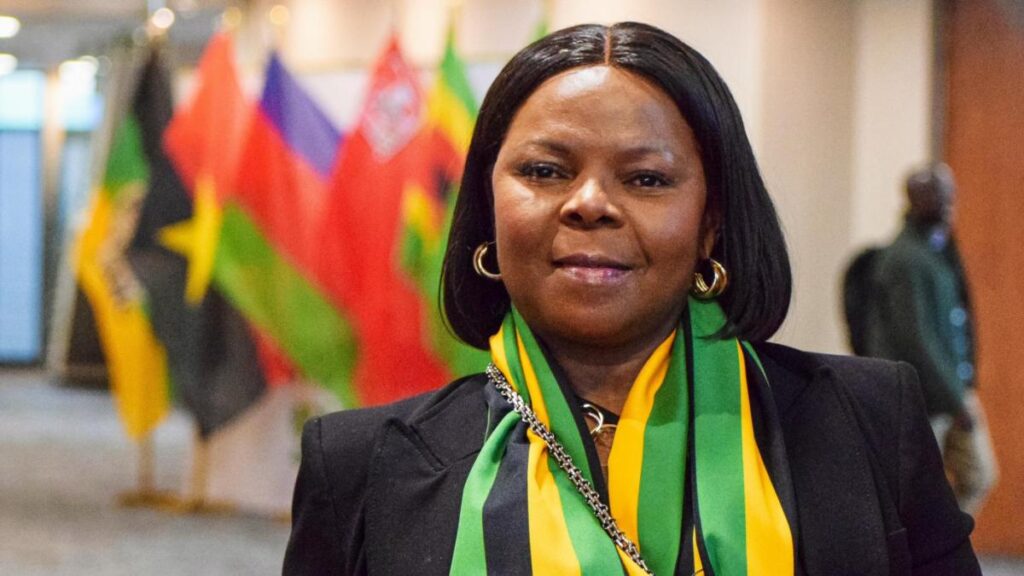
ANC spokesperson Mahlengi Bhengu hit back, dismissing the DA’s proposal and saying transformation laws are here to stay in South Africa.
“The idea of a future South Africa without transformation laws, starting with triple-BEE, is one that must be challenged by all democracy-loving people and patriots,” she said.
Bhengu added that there are many black people who have been beneficiaries of BEE and transformation policies.
“We have seen a lot of excellence, with people rising in the corporate sector and the public sector,” she said.
She added that many women have climbed the corporate ladder and have risen to executive level at Eskom and elsewhere.
“Many of those people are proud beneficiaries of black economic empowerment,” Bhengu said in an SABC interview.
She said there will not be a situation where the race-based policies are replaced in South Africa with other empowerment laws.
“There will not be a day in South Africa where black economic empowerment is scrapped as legislation,” Bhengu said.
She added that there can be amendments. However, these amendments should not deviate from the substance of the legislation.
President Cyril Ramaphosa said he had not seen the DA’s “Economic Inclusion for All Bill” and could, therefore, not comment directly on it.
However, he added that if the DA wants amendments to the BEE policy, they must take their proposal to parliament.
However, he said the current BEE policies, which are rooted in the constitution and the laws they have passed, remain in effect.
