

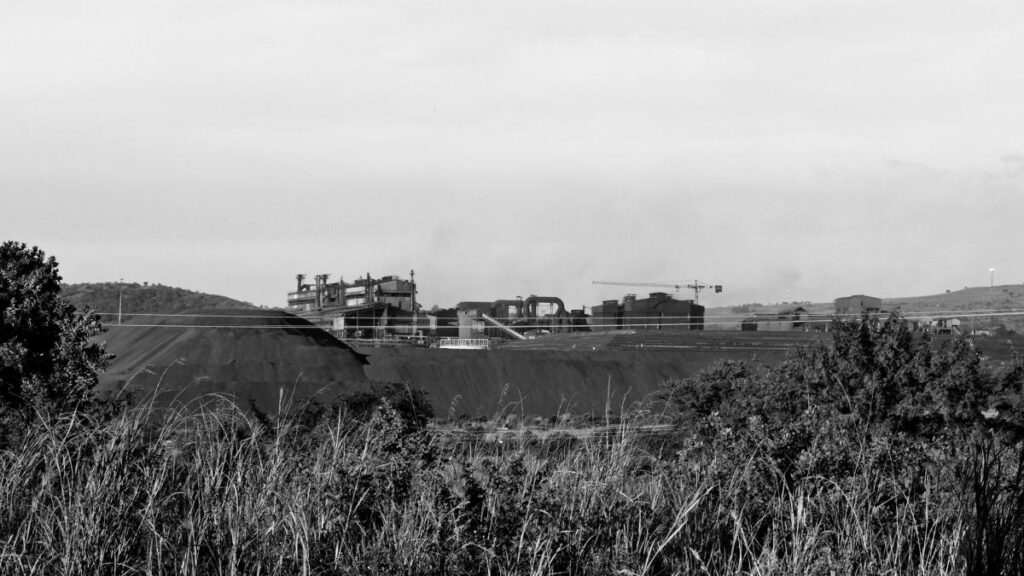
Trade union Solidarity warned of significant job losses at South African smelters and other related heavy industries due to government failures.
It added that some of the employers will be forced to finalise their retrenchment processes within the next few weeks.
These retrenchments could affect thousands of workers toward the end of this year or the beginning of 2026.
According to Solidarity chief executive Dirk Hermaann, this loss of work is created by government failures.
“Despite the dark cloud of retrenchments hanging over us, we are experiencing a total lack of urgency from the government,” he said.
“Employers have been citing government failures as the main reason for the wave of retrenchments in the energy-intensive industries.”
He said the survival of ferrochrome smelters and the steel sector is threatened by unaffordable Eskom tariffs and Transnet’s collapse.
Transnet’s poor performance means that only about 20% of transport to and from smelters is by rail.
In the case of stainless steel exported to the USA, logistics costs account for as much as 50% to 80% of local production costs.
The situation is exacerbated by the influx of cheap steel imports, particularly through dumping, and the imposition of export tariffs on South Africa.
Apart from the job losses in the smelting and steel industries, other sectors, which include mining and vehicle manufacturing, are also affected.
“All the reasons for the retrenchments are government failures that can be addressed. The first and fairly easy win is the electricity tariff structure,” Hermann said.
“Since 2007, electricity tariffs for smelters have increased by 900%. 40% to 60% of the ferroalloy industry’s costs are electricity.”
He said the electricity dispensation is destroying the industry, with all the downstream industries that follow.
Companies in the smelting industry are suffering

The affected companies in the smelting industry include Ferroglobe SA, Transalloys, Samancor Chrome, Assmang, MMC Nelspruit, and Glencore-Merafe.
Many other companies have already been plunged into retrenchment processes or have closed for similar reasons.
ArcelorMittal is one such example, with approximately 4,000 direct and indirect jobs having been cut.
Manufacturing at Columbus Stainless Steel was also severely affected in 2025, with production reduced by more than 50%.
Ferroglobe’s silicon smelter closed in September 2024, while its ferrosilicon production in Witbank came to a complete halt between April and September.
Assmang’s ferromanganese furnaces in Cato Ridge were permanently shut down at the end of May 2025.
Transalloys in Witbank was operating at full capacity until recently, but is scaling down its production to only 40% from 1 December 2025.
The prospects for a revival at Machadodorp and Meyerton appear unlikely under current economic conditions and electricity prices.
While steel production is increasing in neighbouring African countries such as Zimbabwe, smelters in Angola and Zambia are encroaching on the local market.
Glencore has completely shut down its ferrochrome operations across all of its plants, encompassing 22 furnaces.
This move has already resulted in the loss of 1,500 jobs in Rustenburg and Lydenburg, affecting these struggling towns.
Samancor has similarly reduced its capacity drastically, with only 4 of its 24 blast furnaces currently in production.
The downsizing or closure of the ferroalloy industry will also have a huge impact on downstream industries in the steel industry and manufacturing sector.
Employers are actively engaging with the government to negotiate solutions and are seeking urgent measures to save this industry.
“This is going to develop into a social crisis. The government has caused it, and they must take responsibility,” Hermann said.
He added that it was not only companies which are affected, but also the communities relying on the money from these companies.
