

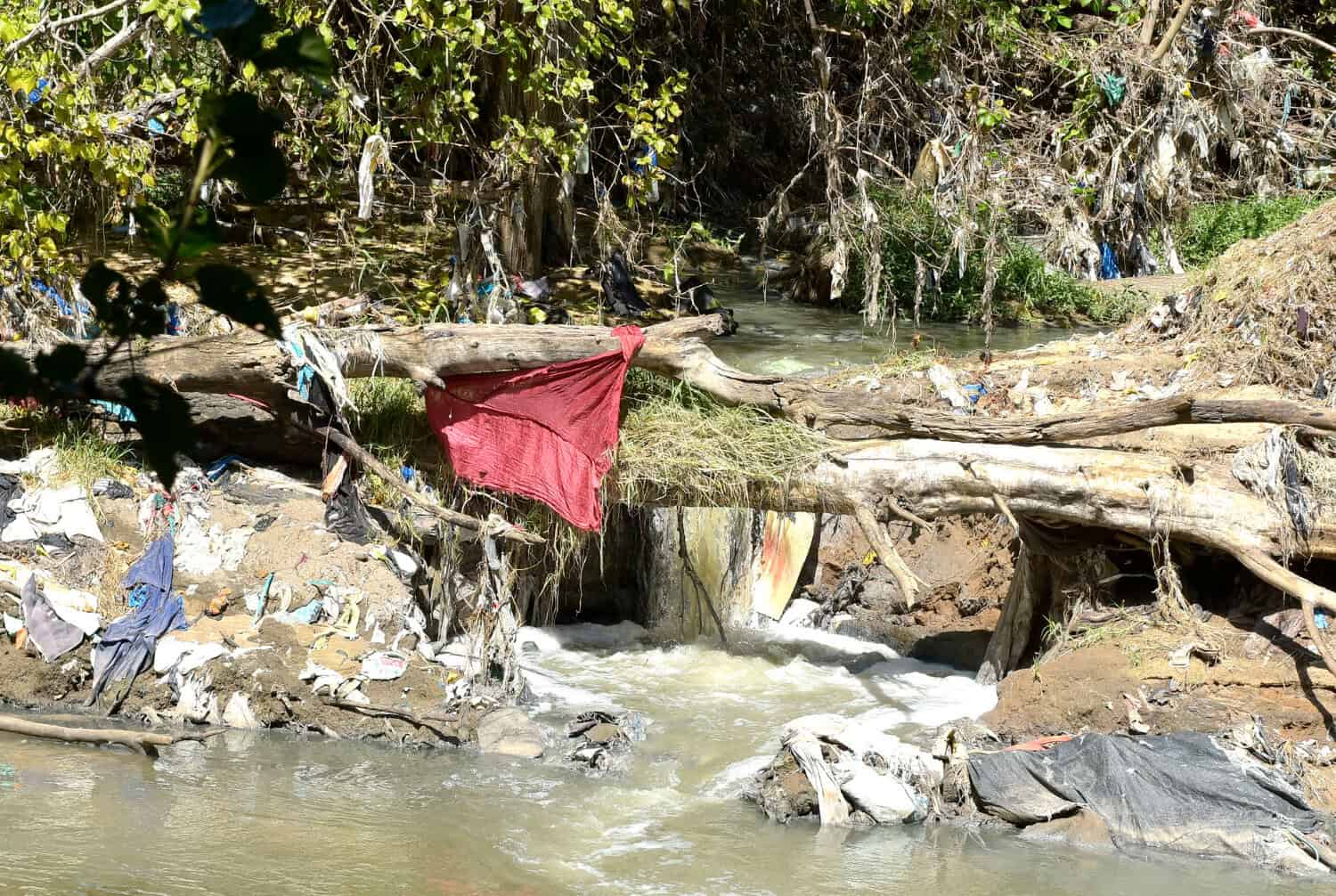
WaterCan conducted E.coli and phosphate testing across the country in September, finding alarming levels of contamination.
A recent snap survey of South Africa’s water resources indicates that E. coli is present in up to two-thirds of the country’s water supply.
In September, the Water Community Action Network (WaterCan) sent 500 test kits to random locations nationwide, and the results revealed an alarming trend.
WaterCan last week released its report on the tests, laying the blame on poor sewerage and wastewater treatment systems.
Tests were not limited to natural water sources; WaterCan found E. coli in taps and jojo tanks.
“These are direct household exposure points, not just polluted rivers downstream. These findings show that the risk has already moved into people’s homes and schools via taps and tanks,” WaterCan stated.
Over 60% of Gauteng tests positive
The presence of E. coli in water supply systems is caused by contamination from human and animal faeces.
In Gauteng, 39 of the 59 (66%) samples classified the water as unsafe for human consumption.
Dams and rivers accounted for 28 of those samples, with 75% of the tests showing high levels of bacterial contamination.
In the Western Cape, 70% of samples showed high bacterial contamination, including 100% of the five river samples collected.
KwaZulu-Natal (KZN), also showed high levels of bacterial contamination in its natural water sources, with all 15 river samples returning unsafe levels of E.coli.
Across the remaining provinces, the aggregate results of their tests showed that 59% of samples tested unsafe levels of E. coli.
“The data shows that no province is spared, with almost all tested surface water resources having unsafe water quality,” stated project sample analyst Professor Anja du Plessis.
“Our rivers and dams have become open sewers, contaminated with chemical pollutants and sewage,” stated the water management expert and Unisa associate professor.
Low levels of chemical pollution
The pollution may be predominantly in open water sources; however, WaterCan found E.coli in the household drinking water in eight municipalities.
These include Johannesburg, Sedibeng, King Cetshwayo, Waterberg, Gert Sibande, Bojanala, Mopani and Pixley ka Seme.
In addition to testing for E. Coli, WaterCan analysed nitrate and phosphate levels from detergents and agricultural fertilisers, as well as dissolved calcium and magnesium.
Chemical pollution was low across all provinces, except for isolated cases of elevated phosphate levels at limited testing sites.
“We are seeing the same pattern across provinces: sewage and wastewater consistently leaking into our rivers and dams, phosphate ‘hotspots’, and even in some cases contaminated taps and tanks, at the point where families drink and cook,” said Du Plessis.
“Until there is routine testing, public reporting and real consequences for polluters, residents will continue to carry the risk.
“The more we test, the more informed decisions can be made, and we can start to hold those who pollute our already scarce water resources to account as a collective,” Du Plessis concluded.
NOW READ: Joburg Water’s R4bn sits on paper, not in the bank, as sweeping arrangement threatens critical infrastructure
