


The rand suffered another blow on Friday, weakening to R17.20 to the dollar during mid-afternoon trade.
The currency has traded weaker this week, largely range-bound around the R17/$ mark as markets remained risk-off, pricing in uncertainties around the US-Iran war.
While the rand recovered slightly after US President Donald Trump postponed further attacks on Iran’s energy infrastructure, little has been done to quell anxieties over the war.
Trump said on Thursday he would postpone attacks on Iran’s energy plants for 10 days at Tehran’s request and that talks with Tehran were going “very well”.
However, reports that the US president was considering sending more troops added to concerns that the war could escalate into a ground conflict, with no certainty that the Strait of Hormuz could be reopened to shipping soon.
“The South African Reserve Bank will have a lot to consider in the coming months and will need to constantly walk a fine line between containing inflation expectations and not disrupting the country’s Gross Domestic Product growth dynamic,” said ETM Analytics.
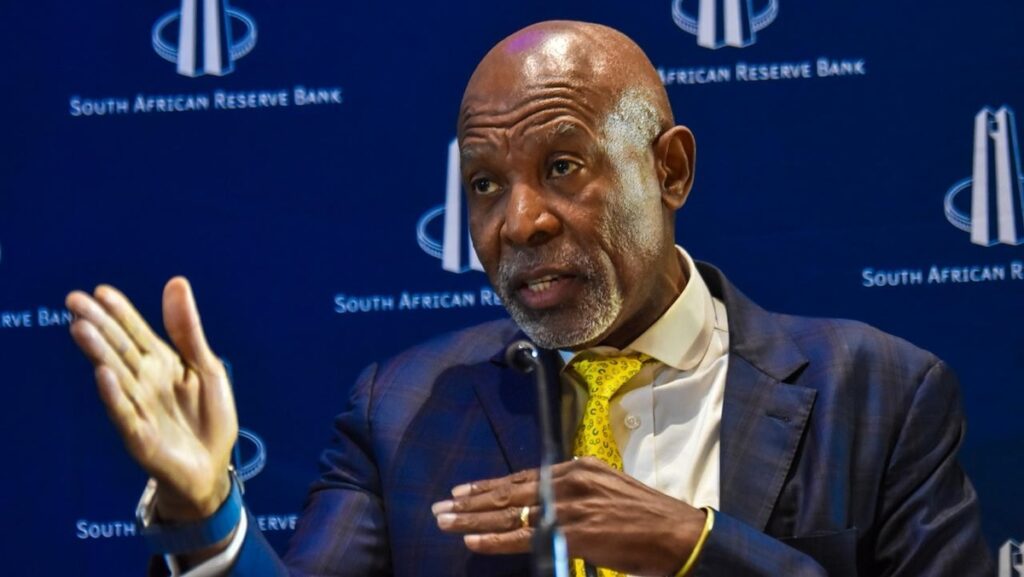
The central bank kept its policy rate at 6.75% on Thursday, saying caution was needed.
According to economists at Nedbank, the Reserve Bank’s hawkish position has provided some mild support to the rand, but it hasn’t been enough to keep it from pushing further past the R17/$ mark.
It added that uncertainties around the war in the Middle East are keeping emerging-market currencies under pressure, pinning the rand above R17.10/$—its lowest levels since the final week of November.
The rand’s weakness is compounding the pressure on local fuel price recoveries, which have tanked deep into the red this month thanks to the war.
After trading under $60 a barrel at the start of the year, oil prices have shot as high as $120 a barrel in March because of the United States’ war.
Brent crude prices have fluctuated around $100 a barrel this month, pushing to $120 a barrel earlier on Friday, 27 March. It is currently trading at $110 a barrel.
Nedbank noted that this is the first time oil prices have held this level since July 2022, in the aftermath of the Russia-Ukraine war.
Prices eased from $120.77 on Friday last week to $110.45 on Wednesday amid hopes of an imminent reopening of the Strait of Hormuz as the US presented proposals to end the war.
However, Iran’s rejection of the proposals and the Trump administration’s insistence on its conditions for ending the conflict pushed oil above $120 on Friday.
Pain on top of pain
Because of the weaker rand and sustained oil price increases, South African fuel consumers are bracing for a mammoth petrol and diesel price hike to be announced in April.
The month-end projections from the Central Energy Fund (CEF) show that petrol should be climbing by between R5.50 and R6.00 per litre (including April’s tax hikes).
Diesel, meanwhile, is in line for a staggering R10 per litre increase.
Nedbank said that this puts South Africa’s inflation risks to the upside, with the Reserve Bank raising red flags about secondary effects in the economy.
The central bank has also compiled ‘worse- and worst-case’ scenarios for the country going forward.
While these are not the bank’s base assumptions, they outline its view if the United States’ war continues for longer.
In the first scenario, the Middle East war continues for another two months, with oil prices averaging almost $100 and the rand depreciating by 5%, while the risk premium rises by 10% over the duration of the conflict.
In this scenario, oil prices average $85, $72, and $67 in 2026, 2027, and 2028, respectively. As a result, CPI exceeds 4%.
The worst-case scenario assumes the war persists for more than a year.
In this scenario, oil prices stay above $100—averaging $97, $118, and $103 in 2026, 2027, and 2028, respectively—the rand falls by 10%, and the risk premium rises by 20%. Here, CPI exceeds 5%.
In both scenarios, the country faces higher interest rates.
In the first scenario, where CPI exceeds 4%, the repo rate rises once, whereas in the more adverse scenario, several hikes push the repo rate to a peak close to 8.25%.
