


New data shows that Rosebank, one of Johannesburg’s high-end residential areas, is emerging as a hijacking hotspot in South Africa.
According to the latest South African Police Service (SAPS) crime statistics for the third quarter of 2025, covering October to December, 4,778 carjackings were reported across the country.
That works out to roughly 50 hijackings every day, underscoring the scale of a crime trend that remains deeply entrenched in South Africa’s major metros.
The SAPS data showed that Gauteng, KwaZulu-Natal and the Western Cape recorded the highest number of hijackings, while the Eastern Cape and Mpumalanga are beginning to close the gap.
The statistics also showed that sedans, hatchbacks and coupes remain the most frequently targeted vehicles, with bakkies and panel vans not far behind.
Fidelity Services Group CEO Wahl Bartmann said the company expects hijackings to continue following the same cyclical trend seen through 2025, where short-term dips are followed by some spikes.
“Recorded hijackings are expected to continue following the cyclical pattern observed in 2025, characterised by short-term declines followed by renewed increases,” Bartmann told BusinessTech.
While there was some relief at the start of the year, he warned that the downturn is unlikely to last.
“A reduction in hijackings was recorded in January 2026, and remained subdued through February, but a gradual escalation is anticipated from March into April 2026,” he said.
Fidelity’s data aligns with that from the SAPS, showing that hijackings remain heavily concentrated in major urban and peri-urban areas, especially in Gauteng, KwaZulu-Natal and the Western Cape.
Bartmann said vehicles such as the VW Polo, Hyundai Grand i10 and Nissan Almera continue to be disproportionately targeted.
He also flagged several well-known hijacking hotspots around the country, including Soweto, Johannesburg Central, Pinetown, Inanda, Mitchells Plain and Khayelitsha.
The high-end suburb becoming a hotspot for these criminals
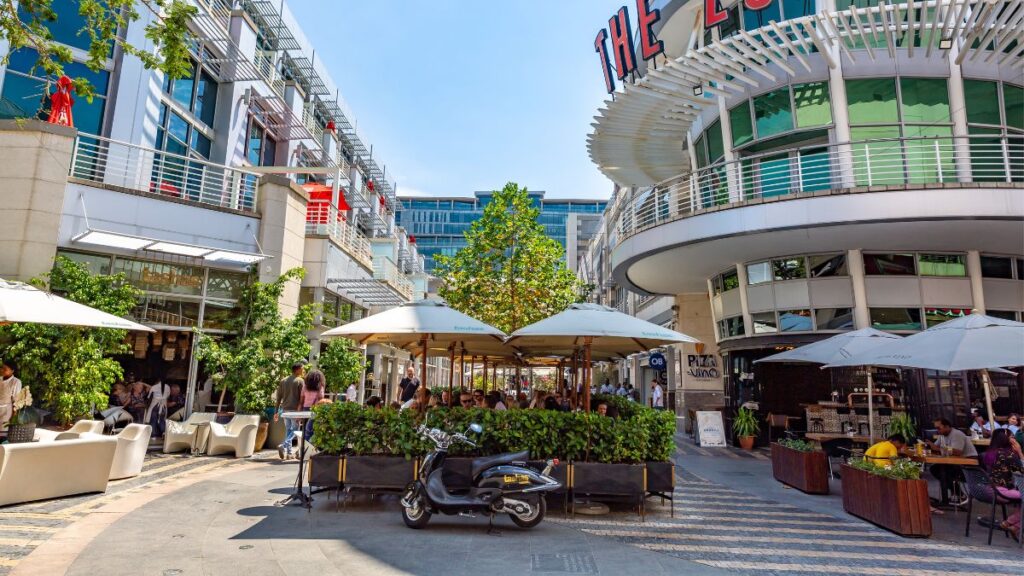
However, among the newer and more concerning hotspots in Gauteng is Rosebank—a suburb more commonly associated with luxury apartments, art galleries and corporate headquarters.
The warning comes as Rosebank enjoys a property boom driven by younger buyers, professionals, investors and semigrants.
According to Lightstone, 74% of buyers in the suburb are under 50, with those aged 36-49 the most active purchasing group.
Located just north of Johannesburg’s city centre, Rosebank has become a hotspot for buyers from Sandton, Parktown North and Dunkeld.
Buyers are typically professionals in banking, legal and consulting who want lock-and-go living close to work, restaurants and retail.
Pam Golding Properties Gauteng Metro regional head Mariël Burger said the area is also attracting Capetonians relocating to Johannesburg for hybrid work.
International buyers are drawn to its Gautrain airport link and lively mix of dining, culture and entertainment.
Rosebank’s sectional title market remains especially attractive. The median price currently sits at R1.9 million, with strong liquidity in the R1.5 million to R3 million range for modern one- and two-bedroom apartments.
Entry-level studio and one-bedroom units priced from R800,000 to R1.5 million remain in demand, while two-bedroom apartments from around R2.5 million to R4 million appeal to both owner-occupiers and investors.
Luxury penthouses, meanwhile, range from R5 million to more than R12 million. “Developers are responding with energy-efficient, amenity-rich projects, yet demand continues to outstrip supply,” Burger said.
“It’s not surprising, as Rosebank offers 30 to 40% better value than Sandton while matching its lifestyle quality.”
“For instance, a two-bedroom, two-bathroom apartment priced around R2.5 million in Rosebank compares favourably with R3.5 million to R4 million for a similar home in Sandton.”
“This makes Rosebank one of Johannesburg’s strongest value-for-money precincts.”
