

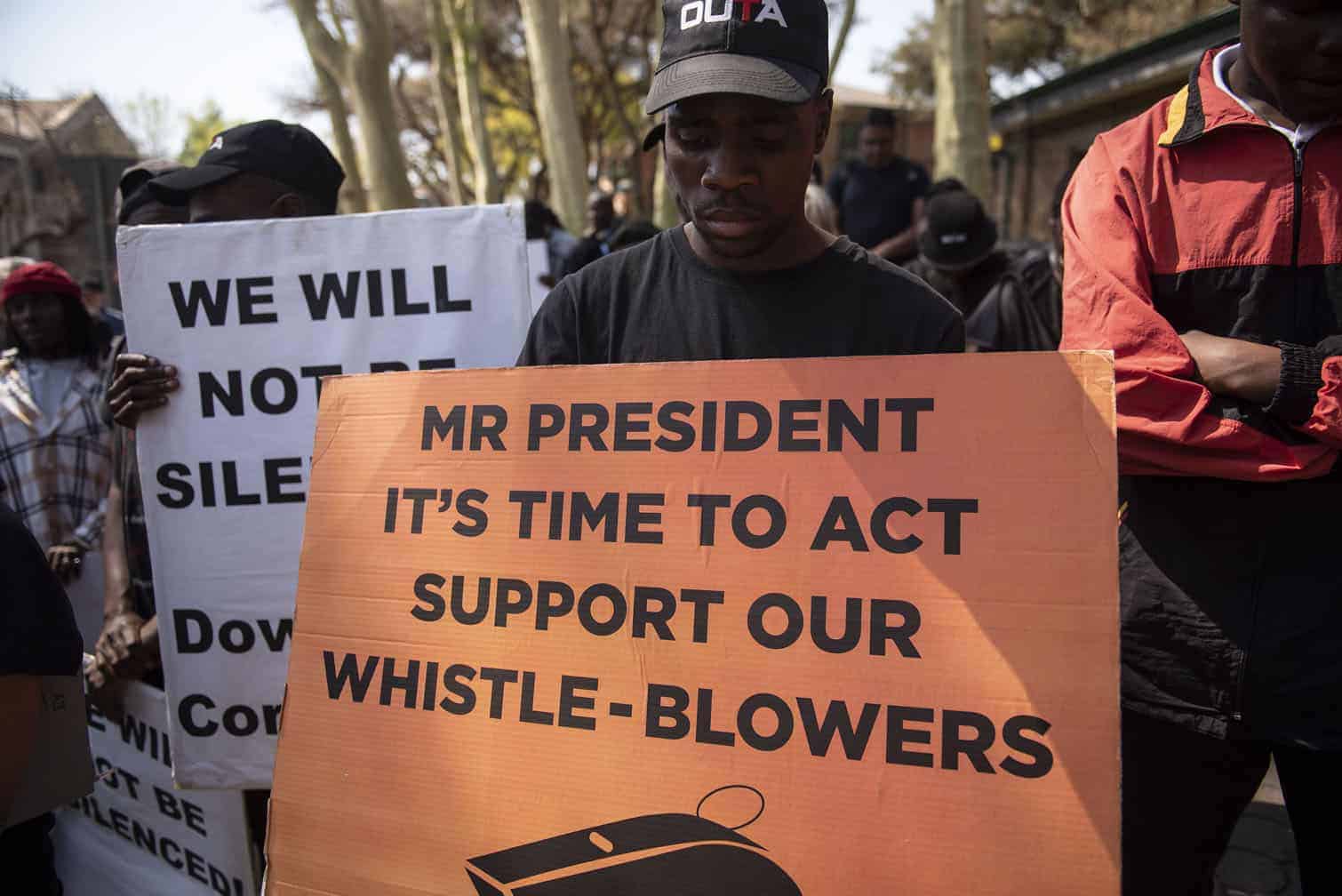
The public has until 14 May to suggest reforms to the Bill.
The Department of Justice and Constitutional Development (DoJ&CD) has moved to dismantle the “culture of silence” surrounding corruption, with it now being up to the public to give their views on it.
The department recently unveiled a draft bill that overhauled the Protected Disclosures Act (PDA).
Following scathing findings from the Zondo Commission of Inquiry, which labelled the existing law as “not clear-cut” and “insufficient,” the Ministry of Justice and Constitutional Development introduced aggressive reforms, including monetary rewards for disclosers and 15-year prison sentences for those who retaliated against them.
Why?
The draft bill, which incorporated recommendations from the National Anti-Corruption Advisory Council (NACAC) report of August 2025, sought to transform whistleblowing from a high-risk gamble into a structured, state-protected civic duty.
“A draft bill was prepared taking into consideration the Zondo Commission’s recommendations and the NACAC report, guidelines from international instruments and foreign jurisdictions,” said the DoJ&CD.
What is different?
The proposed legislation shifted the burden of safety from the individual to the state and the employer through several changes.
Breaking from previous policy, the bill would allow courts to award whistleblowers up to one-fourth (25%) of any monetary sanction imposed on a convicted employer.
However, it would not necessarily take the form of cash payments or rewards equal to the value of the corrupt activity.
It also significantly raised the stakes for workplace bullying. Any employer or individual who subjects a whistleblower to “occupational detriment” or “detrimental action” could face up to 15 years in prison.
To ensure accountability, the bill requires the president to designate a retired judge to investigate complaints. This office holds the power to enter premises, seize documents, and refer matters directly to the South African Police Service (SAPS) or Chapter 9 institutions.
Authorised persons must now acknowledge a disclosure within five days and complete investigations within 12 months.
This addressed a key Zondo Commission criticism regarding information getting “lost” in the system.
Defining the boundaries of protection
The bill draws a sharp line between legitimate whistleblowing and malicious reporting.
It extended full protection to individuals who disclosed information to an employer, a legal adviser, or a member of the Cabinet, provided they reasonably believed the information was substantially true.
The law also shielded those who acted to prevent an imminent danger to public life, health, or safety.
However, the legislation explicitly stripped these protections from anyone who intentionally disclosed false information. This includes having acted with the primary motive of avoiding personal disciplinary action.
Furthermore, the bill disqualified disclosures made for “pecuniary gain” outside of the specific rewards authorised by the Act, as well as any reports made with the sole intention of causing harm to an affected party.
Shifting the burden of proof
In a landmark procedural shift, the bill moved the evidentiary burden. Once a whistleblower proves they suffered for speaking out, the burden of proof shifts to the employer. The company then has to convince the court that its actions were not a form of revenge.
A call for public scrutiny
The Department emphasised that these reforms aimed to “weave every sokonnect into a fabric of mutual respect.”
The public has until 14 May 2026 to submit comments on the Bill to the Director-General of Justice via [email protected].
Support Local Journalism
Add The Citizen as a Preferred Source on Google and follow us on Google News to see more of our trusted reporting in Google News and Top Stories.
