


The latest Braai Index shows that the cost of South Africa’s favourite pastime has experienced its biggest monthly increase in a year.
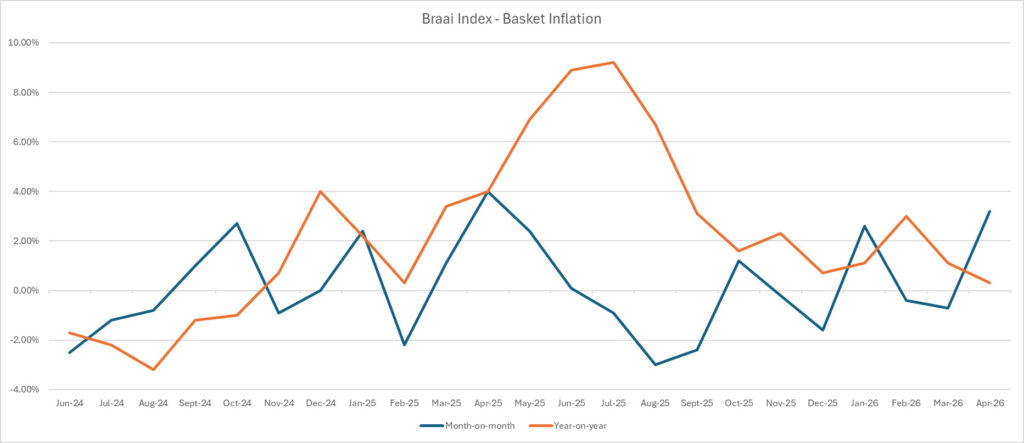
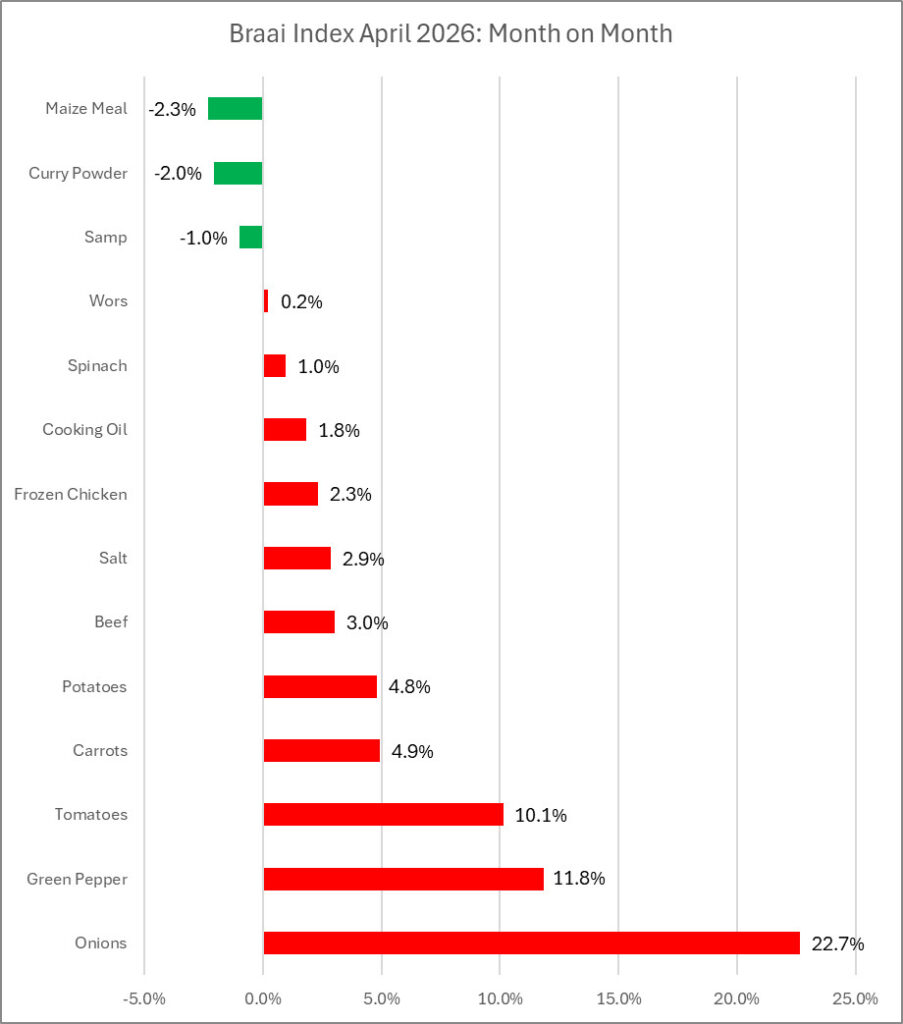
The index, which tracks a basket of food items used when hosting a braai, shot up 3.2% between March and April 2026, reflecting the sudden surge in inflation over the month.
Prices spiked in April thanks to the massive petrol and diesel price hikes experienced at the start of the month.
This was as a result of rising global oil prices tied to the war in Iran, which saw shipments throttled and eventually shut down.
The last time South African braai lovers experienced such a sharp increase in prices was April 2025, when the Trump Administration in the United States initiated a global tariff war, including against South Africa.
At the time, the Braai Index reflected a 4% month-on-month rise in basket prices.
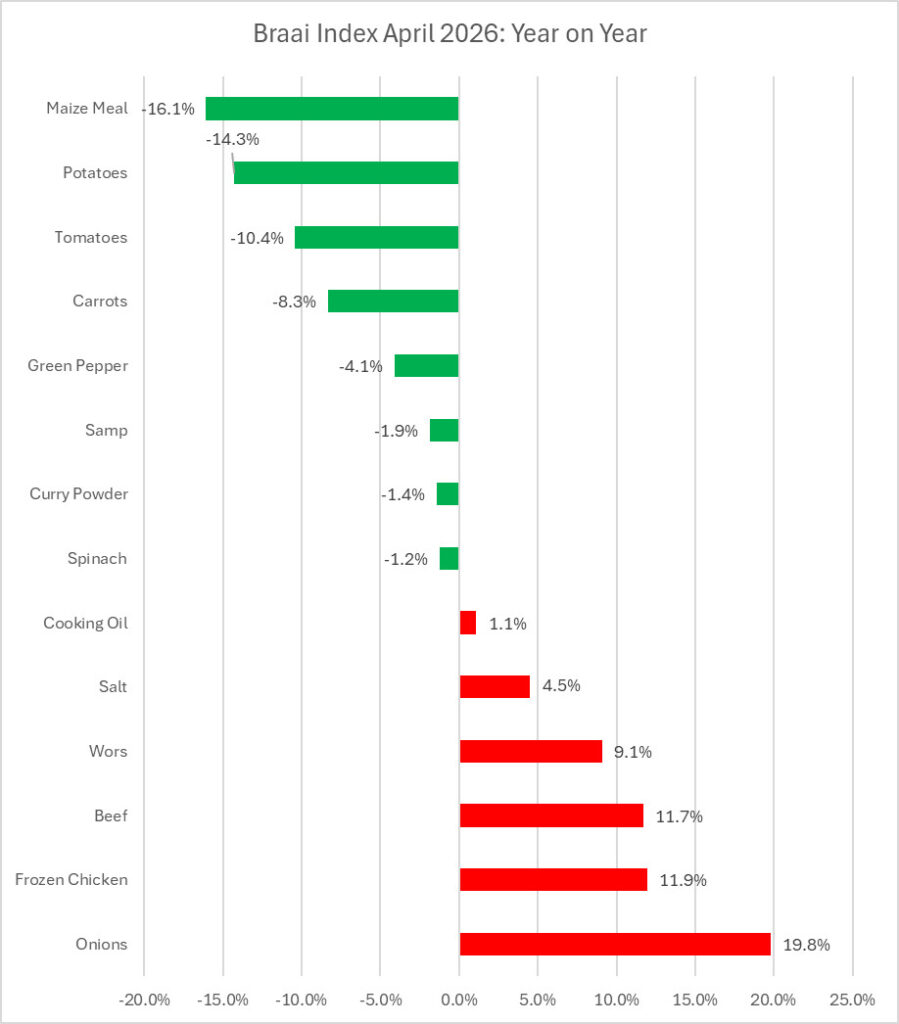
Because of this congruency between April 2025 and 2026, the year-on-year inflation is relatively flat, increasing only 0.3%.
However, this is still bad news for consumers, as it reflects high prices across both periods.
The Braai Index is compiled monthly by BusinessTech using pricing data from the Pietermaritzburg Economic Justice and Dignity (PMBEJD) group. The index’s methodology originated with Bloomberg.
The PMBEJD’s data reflects real “on the ground” pricing across South Africa’s major provinces and includes the items found in the shopping baskets of the majority of South African households.
The index, in turn, tracks the prices of a selection of essential items typically used for a South African braai, offering a more focused view of inflation at the grill.
The index includes meat (beef, wors, chicken portions), vegetables (spinach, carrots, tomatoes, potatoes, onions, green pepper) and others (samp, maize, curry powder, salt).
Because the index is based on PMBEJD data and the group does not include other protein types like pork or lamb, these alternatives are not included in the analysis.
Month-on-month [+3.2%]
Year-on-year [+0.3%]
Inflation shock incoming
The Braai Index for April shows a worrying surge in inflation that will likely show in the official inflation data published by Stats SA later in May.
The inflation shock is widely anticipated, with economists expecting the official CPI figure to come in over 4%.
According to economists at Nedbank, the inflation outlook has deteriorated sharply amid global price pressures stemming from the war in Iran.
Adding to the higher energy costs as a result of the war, administered prices—notably electricity and water tariffs—will also continue to exert upward pressure on input and operating costs, the bank said.
“Taken together, these developments point to a higher inflation trajectory in the second quarter of the year.”
The South African Reserve Bank (SARB) has warned that the inflation outlook is directly tied to the length of the war, and the longer it continues, the more likely it is that higher inflation becomes entrenched.
If this happens, the central bank may be forced to hike interest rates to quell demand and keep South Africa’s inflation trajectory on the path to the new 3% target.
The current prospects are not positive, with the Trump Administration threatening to keep the pressure on Iran for months.
Meanwhile, fuel price hikes are expected for May, with the termination of the government’s fuel price relief also adding pressure to pricing in June and July, putting higher inflation on the cards for the near term.
