


Results from a recent Schools Water Testing Project by environmental NGO WaterCAN found that nearly a third of participating schools had high levels of E. coli in their drinking water.
Escherichia coli (E.coli) is a bacterium usually found in the gut of humans. While most strains are harmless, they can also indicate the presence of dangerous pathogens.
When E. coli is detected, it usually indicates that the water source tested has been contaminated by sewage, septic systems, or agricultural runoff.
WaterCAN tested the drinking water of 72 schools, and 20 test results were flagged as “dangerously unsafe.”
Twelve of the unsafe samples came directly from taps, while the other eight unsafe samples came from water tanks.
After the results were revealed, the NGO issued urgent letters to the affected schools and local authorities of each, asking for immediate intervention.
WaterCAN Citizen Science and Training Coordinator Nomsa Daele expressed concern about the results, noting that they also indicate possible faecal contamination.
Faecal contamination poses a direct health risk to both school learners and staff members, highlighting the NGO’s concerns about the decline of South Africa’s water safety.
“The presence of E. coli in drinking water is particularly serious and requires urgent attention, as it may lead to waterborne illnesses,” said Daele.
“Ensuring safe drinking water in schools is critical to protecting the health, dignity, and well-being of children,” she said.
“Although these are indicator tests, they serve as an important early warning of contamination.”
Daele said that WaterCAN’s school-based initiative, which is driven by sokonnect science, is particularly relevant in light of Earth Day, which was observed on April 22, 2026.
“The 2026 Earth Day theme, ‘Our Power, Our Planet,’ underscores that environmental progress depends on community action, innovation and local solutions, not only national policy,” she said.
Daele said this highlights the need to strengthen energy reliability, advance sustainability and inspire collective action by citizens, schools and cities to protect the planet.
Call for urgent action
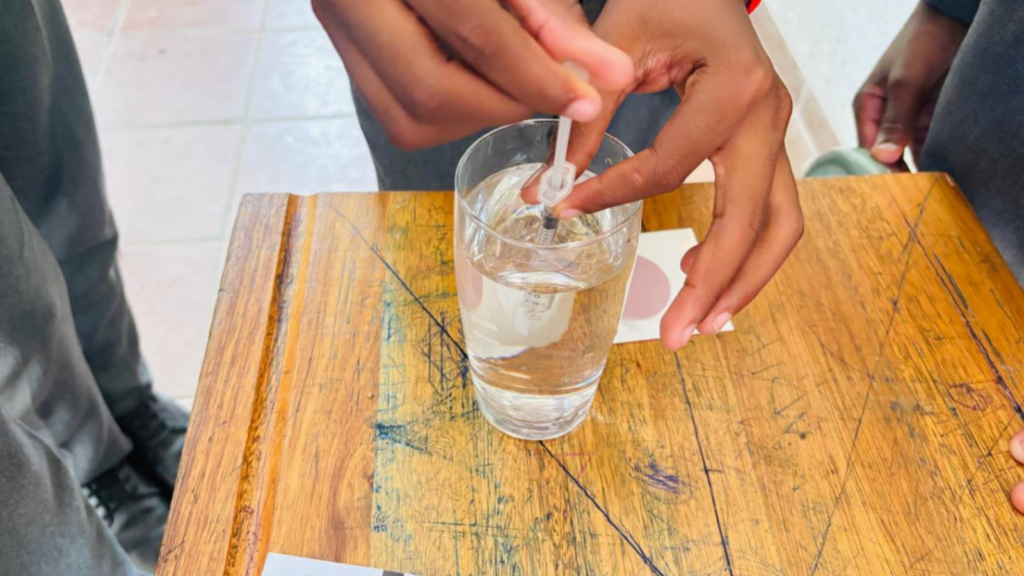
Daele said that WaterCAN had requested the municipalities responsible for supplying water to the affected schools to take several important actions.
First, they should conduct confirmatory tests on the water quality at the schools. Second, they need to investigate the source of the contamination.
Lastly, she said they must take immediate corrective measures to ensure the water is safe for consumption.
“Given the potential risk to children’s health, we urgently need a prompt response and action on this matter,” said Daele.
The municipalities that were contacted include Chief Albert Luthuli Local Municipality in Mpumalanga and Winnie Madikizela-Mandela Municipality in the Eastern Cape.
The City of Cape Town in the Western Cape, Enoch Mgijima Local Municipality in the Eastern Cape, Makana Municipality in the Eastern Cape, and Matjhabeng Local Municipality in the Free State were also contacted.
Further municipalities that were contacted include Mpofana Local Municipality in KwaZulu-Natal, Nelson Mandela Bay Metropolitan Municipality in the Eastern Cape, and Nketoana Local Municipality in the Free State.
Sundays River Valley Local Municipality in the Eastern Cape, and Umvoti Local Municipality in KwaZulu-Natal were also contacted.
“Of deep concern is that in some of the municipalities where biological elements were found in school drinking water, they were also flagged for failing to meet basic compliance requirements in the Blue Drop Report released in 2023,” said Daele.
According to Daele, the municipalities identified in the 2023 Blue Drop Report that did not meet the basic requirements of SANS 241:2015 drinking water standards are Makana, Chief Albert Luthuli, Sundays River, and Nketoana.
Schools participating in WaterCAN’s Citizen Science Testing Kit have been testing their water and uploading the results to the MapMyWater Portal, sponsored by the French Embassy in South Africa.
