


Although the city of Johannesburg is widely referenced as a city of possibilities, property growth data shows signs of negative sales and years of decay.
“Within Johannesburg and in Pretoria, there are pockets where there is great activity and places to invest, but overall there’s still a bit of a negative flavour,” Lightstone Property Managing Executive Hayley Ivins-Downes told Moneyweb Radio.
Ivins-Downes said that with the upcoming elections looming, there has been an increase in the drive to turn Johannesburg around.
“What was really encouraging was at the backend of last year, we actually started seeing an uptick in terms of our inflation within the Johannesburg area, which we hadn’t seen for the last two years,” said Ivins-Downes.
She said the start of the year brought excitement for those in the property business; however, this was dampened after the global conflict and its effects on the property market and interest rates.
Ivins-Downes explained that there are select areas within Johannesburg and Pretoria that have experienced great activity and serve as good areas to invest in.
Old offices in central Johannesburg (CBD) are being repurposed into affordable housing, which Ivins-Downes describes as an essential move to drive change in the market.
However, the scale at which these residential conversions are being done requires acceleration before any differences are noted.
“We need a scale of change to be happening to be able to see the change, and our sense is that it’s going to take time,” said Ivins-Downes.
She said the regeneration strategy will make a difference to the property market, not just in Johannesburg Central, but in other suburbs within Johannesburg.
“If we have a way to address some level of affordable housing, and if this is the way that we can do it, then it’s something that we should be looking at more of,” said Ivins-Downes.
Johannesburg’s in-demand suburb
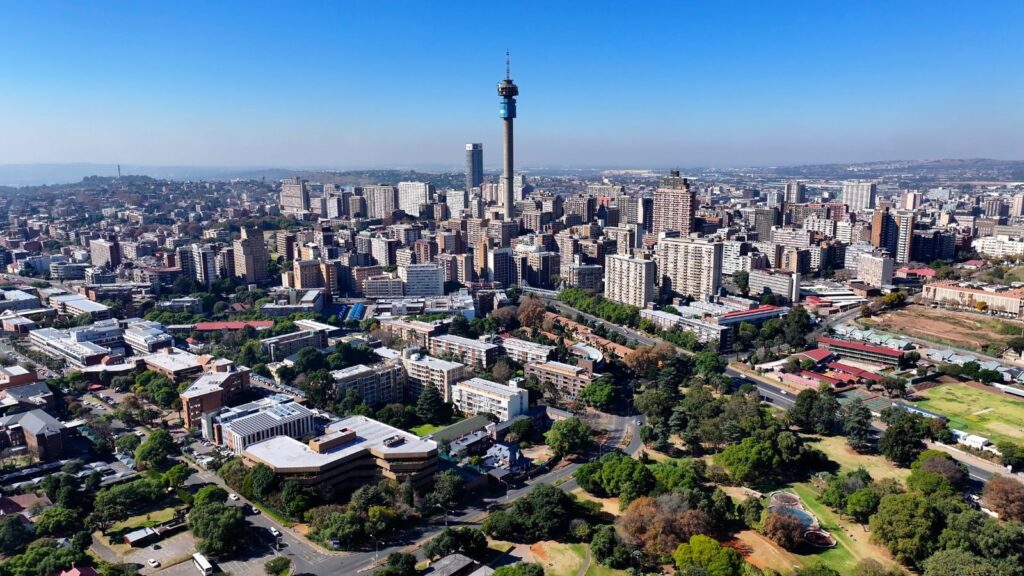
Property buyers in South Africa are increasingly drawn to suburbs in Johannesburg South, particularly Alberton, due to their affordability and value for money.
The area’s appeal is enhanced by its accessibility to major transport routes and the city centre, along with spacious erven, green open spaces, and proximity to schools, shopping malls, and other amenities.
These factors make it a popular choice for both buyers and investors.
Chareen Mota, area manager for Pam Golding Properties in Johannesburg South, notes that the region features a wide range of property types and price points.
Residential property prices vary significantly, encompassing sectional title and freehold homes priced below R1 million, as well as middle-market homes ranging from R1.5 million to the late R3 million.
There are also properties exceeding R10 million, including luxury homes situated in estates.
Mota highlighted that the highest sales volume occurs in the middle market, specifically between R800,000 and R2 million.
This price segment offers excellent value for money and the potential for solid long-term capital growth, supported by consistent demand for residential accommodation.
Many buyers already residing in Johannesburg South are choosing to stay local, either upgrading or downsizing in response to evolving lifestyle needs and preferences.
First-time buyers typically opt for sectional title homes priced around or just below R1 million, while more mature purchasers often prefer houses and cluster homes.
“The highest volume of sales is concluded in the middle market, from approximately R800,000 to around R2 million,” said Mota.
“This segment offers excellent value for money, as well as the potential for solid long-term capital growth, underpinned by consistent demand for residential accommodation.”
Cluster living in Meyersdal is especially popular among retirees seeking secure, lock-and-go properties, with prices ranging from R2.5 million to R4 million.
