

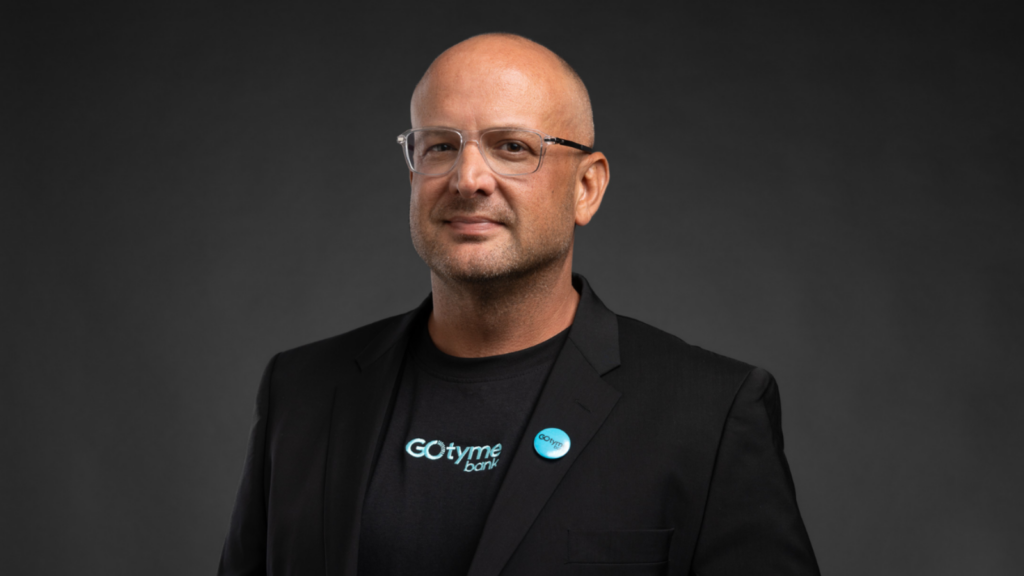
By: Rean Bloem Managing Executive, Business Funding, GoTyme Bank
Small and medium-sized businesses (SMEs) play a critical role in South Africa’s economy, driving job creation, innovation, and growth across industries. But in today’s environment, running a business is not just about growth – it’s about navigating pressure.
And the pressure right now is real. It is measurable. And it is converging from multiple directions at once.
The Operating Environment Has Changed
In early 2026, escalating conflict in the Middle East sent global oil markets into a tailspin. Brent crude surged past $100 a barrel, more than 30% above where it stood just months earlier. The impact on South African businesses was immediate.
Domestic fuel prices jumped 18.5% in a single month in April 2026, one of the largest month-on-month increases in recent history. The government stepped in with a R3-per-litre fuel levy reduction to cushion the blow, but without that relief, prices would have risen closer to 33% in a single month.
And the pressure has not eased.
Following April’s increases, fuel prices rose again in May 2026, with petrol increasing by R3.27 per litre and diesel by R5.27 per litre, despite continued government fuel levy relief measures.
The increases continue to be driven by global supply disruptions linked to escalating conflict in the Middle East, alongside broader inflationary pressure and currency weakness. Brent crude remains elevated above $100 a barrel, while the South African Reserve Bank continues to warn of fuel-driven inflation risks and possible further rate hikes later this year.
The ripple effects extend well beyond the petrol station. Transport typically accounts for 10–15% of the final cost of goods, meaning a logistics-dependent business could be facing freight cost increases of 15–25% almost overnight.
RMB Global Markets Research, in their April 2026 report The Shock of War, revised South Africa’s inflation forecast upward from 3.4% to 4.4% for the year. The South African Reserve Bank is now expected to hike interest rates by 25 basis points later this year, while GDP growth has been revised downward from 1.6% to 1.2%, an economy that was showing genuine signs of recovery now being pushed back.
For SMEs, this is no longer a short-term disruption. It is an operating environment.
Transport-heavy industries, retailers, agriculture, logistics businesses, and food suppliers are already feeling the pressure through rising input costs, tighter margins, and increasing cash flow strain.
This is why deliberate financial planning, flexible access to working capital, and greater visibility over cash flow matter more than ever.
4.4% South Africa’s revised inflation forecast for 2026 (up from 3.4%) – RMB Global Markets Research, April 2026
The Gap Between Growth and Cash Flow
Even profitable businesses can experience short-term cash flow pressure. Performance on paper does not always translate into liquidity in the bank. Growth often requires businesses to spend before they earn – stock must be purchased before it is sold, suppliers must be paid before revenue is received, operational costs continue even when cash flow slows.
This gap between money going out and money coming in is what we call working capital. In a high-cost, unpredictable environment – the kind that RMB has documented in ‘The Shock of War’ – that gap becomes wider and far more difficult to manage.
To navigate this effectively, business owners need to focus on three things: clarity, control, and capacity.
Clarity, Control, Capacity
Clarity starts with understanding your numbers. In a volatile environment, it is no longer enough to review financials monthly or quarterly. With inflation revised upward and interest rate pressure building, businesses need a real-time view of their cash flow – what is coming in, what is going out, and where the gaps are forming. When you have clarity, you can make decisions based on facts rather than reacting to uncertainty.
Control is about how you respond. This includes managing costs, adjusting pricing where necessary, and being deliberate about how and when you use capital. It also means having access to funding that works with your business, not against it. With RMB now forecasting SARB rate hikes later this year, rigid financial structures can create additional pressure instead of relieving it – making flexibility in your funding arrangements more important than ever.
Capacity is often overlooked, but it is just as important. Running a business under sustained cost pressure takes a real toll. Protecting your ability to think clearly, plan effectively, and act decisively is a strategic advantage – not a luxury. This means building financial buffers before you need them, not when the pressure has already peaked.
The Right Kind of Funding
Traditional lending models are not always designed for how SMEs operate. Lengthy approval processes, strict collateral requirements, and fixed repayment structures can make it difficult for businesses to access funding when they need it most. In many cases, by the time funding is approved, the opportunity has already passed – or the pressure has already escalated.
A more modern approach to funding focuses on flexibility and alignment with real trading conditions.
GoTyme Bank is part of this shift, offering funding solutions designed around how businesses actually operate. Through GoTyme for Business, the bank provides working capital options that respond to the realities of cash flow timing and operational needs.
At the centre of this offering is the GoTyme Business Advance.
Instead of a traditional interest model that compounds over time, the GoTyme Business Advance uses a fixed fee agreed upfront. This gives business owners full visibility of costs from the start, allowing for better planning and fewer surprises – especially important in an environment where RMB’s revised inflation and rate forecasts are already reshaping cost assumptions.
Funding decisions are also based on factors such as turnover and trading activity, rather than relying only on assets as collateral. This means businesses can access capital in a way that reflects how they earn, how they spend, and how they grow.
Importantly, funding should not be seen as a last resort. When used strategically – particularly in periods of external cost pressure – it becomes a tool that enables businesses to stay in control, act on opportunities, and bridge the gap between growth and cash flow.
Beyond Funding: Building a Deliberate Business
The most resilient businesses are not the ones that avoid pressure altogether. They are the ones that respond deliberately – with clarity on their numbers, control over their decisions, and the capacity to keep moving forward.
Beyond funding, GoTyme Bank also supports business owners through Flex, its free entrepreneurship platform. Flex provides access to practical tools, insights, and a community of over 90,000 SME subscribers – helping businesses make better decisions in real time, whether they are actively seeking funding or not.
As the SME funding landscape continues to evolve, business owners have more options than ever before. The key is choosing solutions that align with how your business actually operates – and building the financial habits that keep you deliberate, rather than reactive, when the next shock arrives.
With the right support and the right approach, businesses can move forward with confidence, even in uncertain times.
If you are looking to take your next step, explore how a GoTyme Business Advance can support your business. Visit gotyme.co.za
