

The Democratic Alliance (DA) wants to launch an investigation into South Africa’s competition laws following two high-profile disputes involving long-time suppliers to Woolworths.
The debate intensified after the collapse of Beyers Chocolates and the closure of Grey’s Marine, both of which blamed deteriorating relationships with Woolworths for their downfall.
The retailer has strongly denied responsibility in both cases, arguing that the businesses’ own commercial decisions led to their problems.
The DA stressed that it is not specifically targeting Woolworths, but rather investigating broader structural problems within South Africa’s retail sector.
Beyers Chocolates, the manufacturer behind products such as Sweetie Pie and Chuckles, is liquidating after 39 years in operation and more than three decades supplying Woolworths.
The chocolatier had recently expanded its operations to serve retailers beyond Woolworths, a move that became the centre of a dispute between the two companies.
According to Beyers founder Kees Beyers, Woolworths terminated an exclusivity agreement after discovering that products similar to its private-label chocolate offerings were being supplied elsewhere.
“They pulled the plug on us, and the pressure of the debt just became too much, and there was no other option but to actually close down the business,” Beyers told 702.
Woolworths rejected suggestions that it was responsible for the liquidation.
CEO Roy Bagattini said the retailer could not be held responsible for the business’s collapse and dismissed claims that the situation was a “David versus Goliath” battle.
The retailer said it had enjoyed a valued relationship with Beyers for decades and noted that, between 2018 and 2023, it had more than doubled its business with the chocolatier.
However, Woolworths said concerns arose in 2023 after it discovered that “products materially similar to Woolworths-exclusive offerings” were appearing in the broader market.
“This was not disclosed to Woolworths and only became apparent once similar products appeared more broadly in the market,” the retailer said.
Another supplier calls out Woolworths

Woolworths argued that the development undermined the intent of the exclusivity agreement and raised concerns about Beyers’ commitment to the arrangement.
After several engagements failed to resolve the issue, the retailer shifted its chocolate production to alternative suppliers by January 2025.
“This was not a decision taken lightly, but it was the right one for our business and our customers,” Woolworths said.
The retailer added that Beyers continued supplying multiple other retailers during and after the partnership ended and said claims that Woolworths caused the liquidation “do not reflect the facts”.
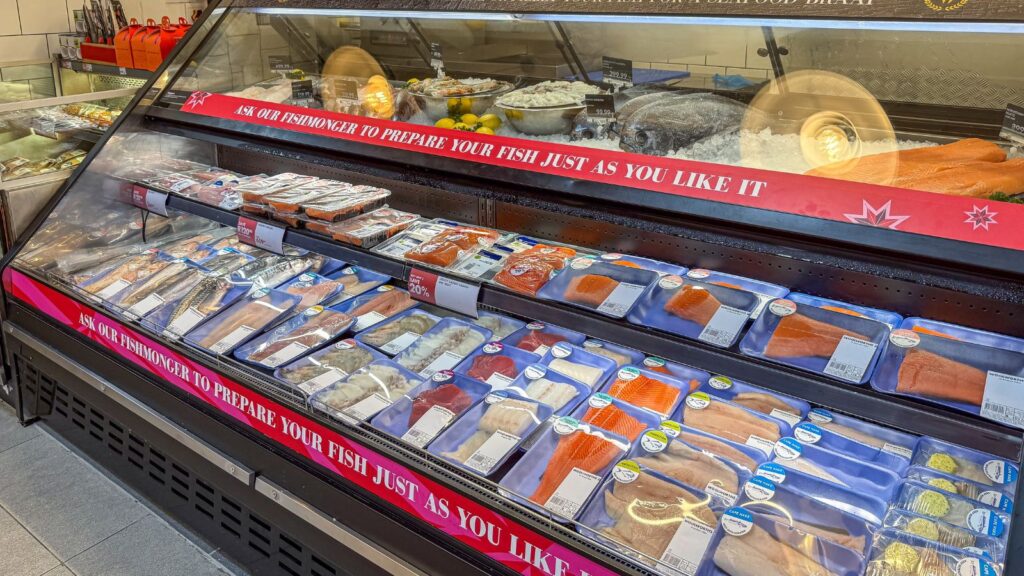
The controversy deepened when Grey’s Marine, a family-run seafood supplier that had worked with Woolworths for more than 30 years, also accused the retailer of mistreatment, bullying, intimidation and threats.
At its peak, Grey’s Marine generated more than R200 million in annual revenue and employed about 200 people.
According to a report by The Citizen, the company claimed Woolworths systematically dismantled a business it had helped build over decades, which led to the closure of the company and the loss of all jobs.
Woolworths has not publicly addressed the allegations in detail but confirmed that senior leadership, including Bagattini, met with Grey’s Marine representatives.
“Our leadership team is committed to working with Grey’s Marine,” the retailer said, adding that it would keep discussions internal for now.
The disputes have led to an examination of South Africa’s Competition Act

The disputes have now prompted the DA to examine whether South Africa’s Competition Act adequately protects suppliers from what the party calls “relative dominance” in retailer-supplier relationships.
In an interview with The Money Show, DA trade, industry and competition spokesperson Toby Chance stressed that the party was not singling out Woolworths.
“I wouldn’t want to pin the blame entirely on Woolworths here. There are other parties that have been involved in similar actions that just haven’t had the same publicity in the last couple of weeks,” Chance said.
Chance said the DA wants to investigate whether competition law should be amended to “level the playing field” between retailers and suppliers.
“What we’re trying to do is to examine what is happening in the retail sector and other sectors too, actually, in terms of what we call the relative dominance of suppliers and their customers,” he said.
He argued that the problem often emerges after suppliers become heavily dependent on a single retailer over many years.
“When pressure comes hard on the supplier, it’s difficult for them to resist, particularly when they’ve built up a relationship with a single customer that has dominance in terms of their overall business,” Chance said.
Under current competition law, dominance is largely measured by market share, with a 45% threshold generally used.
Chance noted that Woolworths accounts for only around 9% of the grocery market, meaning it would not ordinarily qualify as dominant under existing rules.
“The thing is, it’s the relationship between the supplier and the retailer that creates what I call relative dominance,” he said.
The DA also wants to investigate intellectual property issues related to private-label products. Chance said suppliers often develop products and innovations that later become retailer-owned brands, potentially leaving suppliers exposed if disputes arise.
Chance added that South Africa’s highly concentrated economy creates major barriers for smaller businesses trying to survive and grow, even for relatively large companies.
BusinessTech reached out to Woolworths for a response to the allegations made by Grey’s Marine or any additional context on the matter, but did not receive a response by the time of publication. Any comments will be added below once they are received.
