


With youth unemployment in South Africa still hovering above 40%, the need to create meaningful technical career pathways for young people has never been more urgent.
Stats SA’s latest first-quarter figures show that young people continue to bear the brunt of rising unemployment, with many school leavers and graduates struggling to secure meaningful work opportunities after leaving the education system.
At the same time, the automotive aftermarket sector is evolving rapidly through digitisation, advanced diagnostics and electromobility, creating growing demand for a new generation of highly skilled artisans and technicians.
Yet while thousands of young South Africans are unable to access employment, the sector is facing a very different challenge – a shrinking artisan pipeline and an ageing workforce that threatens long-term sustainability across the value chain.
According to the Retail Motor Industry Organisation (RMI), this presents a significant opportunity to connect young South Africans to future-focused, practical careers while simultaneously securing the future of the automotive industry.
“South Africa’s youth unemployment crisis and the automotive sector’s artisan shortage may appear to be two separate challenges, but together they present a powerful opportunity. Our technical trades are quietly facing a crisis,” says Ipeleng Mabusela, CEO of RMI. “The backbone of our automotive and transport sectors – mechanics, electricians, panel beaters and technicians – is ageing fast, with the average artisan now over 50 years old. At the same time, too few young people are stepping in to replace them and talented youngsters are too often poached overseas where there is a similar skills crisis.”
The concern is backed by industry data.
Despite the National Development Plan target of producing 30,000 artisans annually by 2030, Motor Industry Bargaining Council (MIBCO) statistics show declining numbers of qualified artisans and registered apprentices across several core automotive trades.
Motor mechanics, diesel mechanics and auto electricians have all seen significant declines over the past decade.
Auto electricians in particular are becoming increasingly critical as vehicles rely more heavily on electronics, diagnostics and high-voltage systems.
“This is the trade of the future – diagnostics, electronics and EV readiness – but it is still overwhelmingly male and ageing fast,” notes Mabusela.
At the same time, some encouraging trends are emerging.
Automotive body repair and spray-painting trades have shown growth in apprentice numbers, supported by targeted interventions from the RMI and its associations.
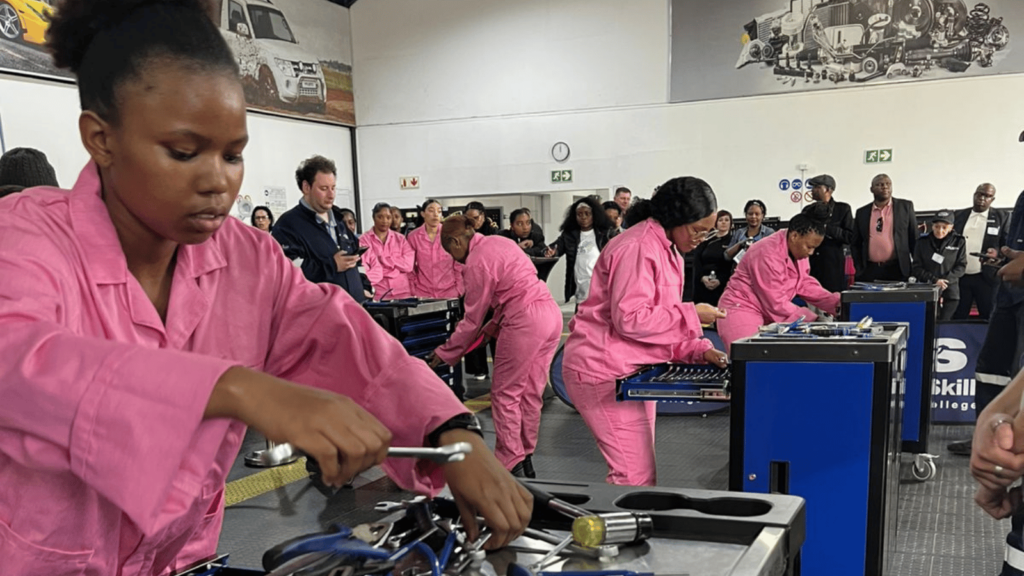
There are currently 378 candidates on the RMI apprenticeship programme, of which 50% are black young women.
“Spray painting, for example, is a high-precision, high-tech trade and one of the most natural entry points for women,” says Mabusela. “We are seeing more young women entering technical careers and excelling in areas ranging from diagnostics to motor body repair.”
The RMI believes changing perceptions around vocational careers remains one of the biggest priorities.
For many learners and parents, university is still seen as the default route to success, despite growing demand for skilled artisans locally and internationally.
“University is not the only pathway to a meaningful career,” says Mabusela. “Many young people thrive in practical, technology-driven environments where they can solve problems and work with their hands. Automotive trades offer globally recognised skills, strong earning potential and real career mobility.”
Today’s workshops are also vastly different from outdated stereotypes.
Modern technicians work with sophisticated diagnostic platforms, software systems, hybrid drivetrains and increasingly complex electronics, requiring a blend of technical skill and digital literacy.
“The vehicles of tomorrow require a completely different skillset,” explains Mabusela. “Young people entering the industry today are preparing for careers in advanced diagnostics, data-driven maintenance, electric vehicles and connected mobility.”
This shift is also helping reshape representation within the industry.
Women remain underrepresented in skilled technical roles, making up less than 10% of artisans in several trades.
However, initiatives such as RMI Women Driving Change and targeted apprenticeship programmes are improving access and visibility.
One of the RMI’s flagship initiatives, Project Dineo, was unveiled during the Motor Mech competition in Kariega last year.
Developed in partnership with merSETA, the Department of Higher Education and Training, Harambee and the Presidency, the initiative aims to train 300 young people over the next three years, with a strong focus on women, youth with disabilities and previously disadvantaged communities.
Apprentices are hosted by RMI member businesses and receive fully funded training through TVET colleges or private training providers.
At present, 48 learners are already on the programme, training through Mercedes-Benz Academy, UXI in George and the Port Elizabeth TVET College.
“This is transformation in action,” says Mabusela. “It is about creating real pathways into artisan careers and building sustainable employment opportunities for young South Africans.”
Partnerships between industry, training providers and government are increasingly recognised as essential to addressing the skills crisis.
The RMI works closely with TVET colleges, technical high schools and industry stakeholders to better align training with workplace realities.
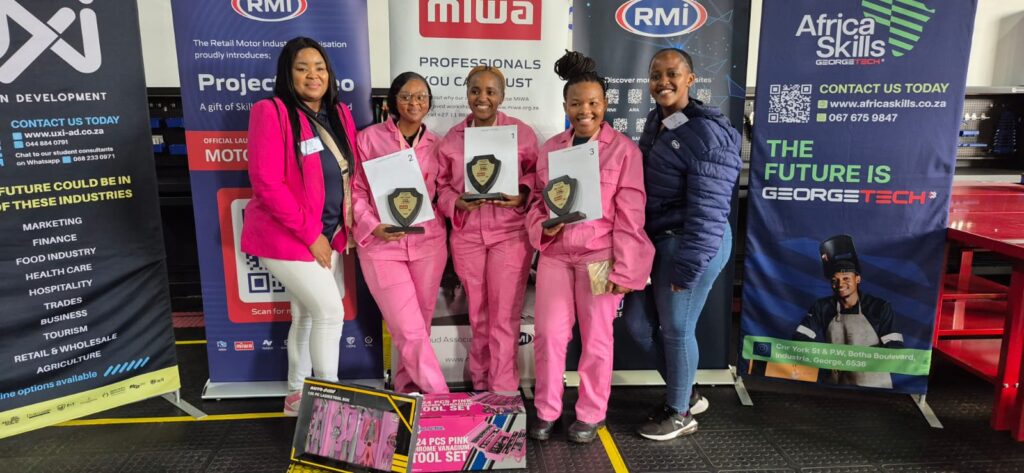
Initiatives such as the MIWA Motor Mech competition have also become important platforms for exposing learners to the automotive sector early.
Since 2019, the competition has expanded across multiple regions, connecting technical schools, apprentices, employers and suppliers.
To date, 140 learners have participated, with the first female competition hosted in George in 2025 and the first female winner announced in Kariega last year.
Equally important is workplace exposure.
Employers are increasingly prioritising practical competence, problem-solving ability and adaptability over qualifications alone.
“Learners who have worked with real vehicles, diagnostic equipment and workshop environments are far more employable,” says Mabusela. “The future of skills development lies in bringing training closer to the workplace.”
For the RMI, Youth Month is a reminder that investing in artisan development is not only a social imperative, but an economic necessity.
“If we want South Africa to keep moving, we need to invest in technical skills now. Encouraging young people into automotive careers is about far more than jobs. It is about protecting the future capacity, competitiveness and resilience of our economy,” concludes Mabusela.
Learn more about the Retail Motor Industry Organisation (RMI).
