


The South African Weather Service (SAWS) has issued a level four and six warning of severe storms for several parts of South Africa.
According to SAWS, harsh conditions are expected from Thursday, 30 April, with the North West, Northern Cape, Eastern Cape and Free State among the provinces most at risk.
The weather service warned that a significant upper-air system is driving the deteriorating conditions.
“A significant upper-air system (Cut-off Low) will drive the prevailing weather conditions, resulting in widespread rainfall of 40–90 mm,” SAWS said.
The most serious impacts are expected in areas under a level six warning, including the western parts of the Free State and North West, as well as the northeastern parts of the Northern Cape.
Authorities cautioned that the rainfall’s intensity could lead to severe consequences. This rainfall is expected to cause significant impacts, including localised flooding and disruption to normal activities.
Damage or loss of infrastructure, settlements (formal and informal), property, vehicles, livelihood and livestock should also be expected.
South Africans should also be aware of travel disruptions (including route obstructions) and road accidents.
A level four warning has also been issued for the central parts of North West, the central and eastern Free State, and the central interior of the Northern Cape, where conditions are expected to be less severe but still dangerous.
SAWS forecaster Moneiwa Singa urged residents in affected regions to remain vigilant and take safety precautions as the storms develop.
“Members of the public are advised to exercise caution by observing driving safety precautions and reducing speed where necessary,” Singa said.
“Avoid flooded roads and low-lying areas, and refrain from seeking shelter under trees or tall objects during storms.”
“The South African Weather Service will continue to monitor conditions closely and will issue updates as necessary on its platforms.”
Common risks for homeowners in winter
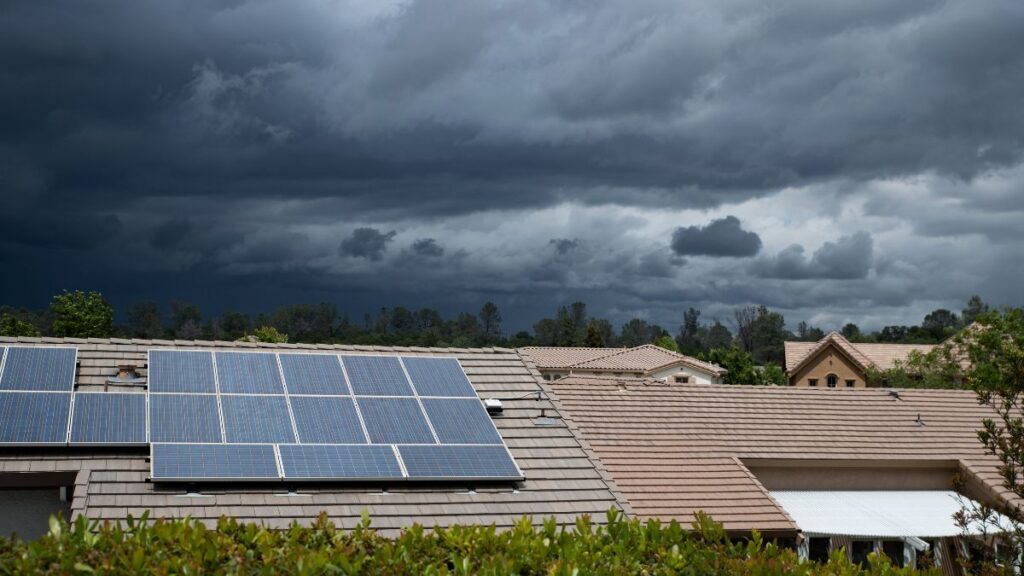
Experts have warned that the cold and wet conditions could also increase the risk of damage to homes and infrastructure.
Marius Kemp, Head of Personal Underwriting at Santam, said preventative measures can help reduce the impact of severe weather.
“For areas hit by downpours and flooding, precautionary measures, such as checking your roof for leaks and clearing your gutters, can help ensure proper water drainage,” Kemp said.
He added that falling temperatures often cause water pipes to burst or freeze. “The cold weather contributes to the bursting of water pipes,” he said.
“Freezing conditions can cause exposed pipes to crack or leak, as water expands when it freezes, increasing pressure within the pipe.”
According to Santam, geyser-related incidents and burst pipes are among the most frequent insurance claims during the winter months.
The insurance company highlighted the need for homeowners to take proactive steps to protect their properties.
Additionally, the increased use of electrical appliances during colder weather raises the risk of residential fires.
“As we rely more on electric appliances during the colder winter months in some areas, the risk of residential fires also increases,” Kemp warned.
“Heaters and electric blankets, in particular, are common causes of electrical fires and should be used with caution.”
He advised households to keep a serviced fire extinguisher on hand and to ensure that plugs, cords, and fuses are in good condition, as South Africans brace for another bout of severe weather.
