

The CSIR has reported a net profit of R40.62 million for the 2024/25 financial year.
This hugely exceeded the targeted loss of R67.6 million, and is a testament to the growth and success the organisation is experiencing.
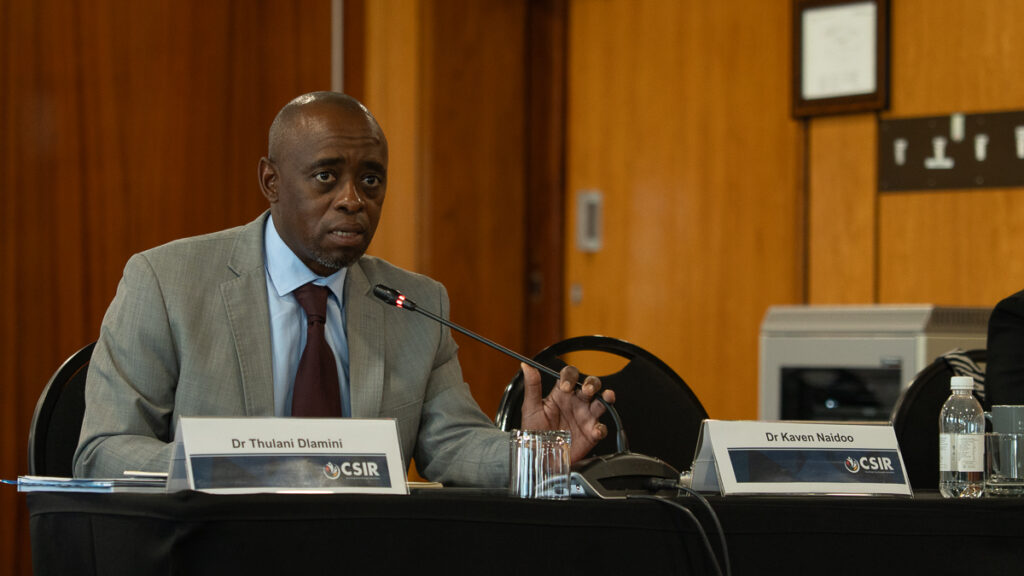
“The results we have achieved over the past year demonstrate very clearly how the CSIR has contributed to strengthening our country,” said CSIR CEO Dr Thulani Dlamini.
“The CSIR continues to play a critical role in addressing South Africa’s developmental challenges – particularly poverty, unemployment and inequality – in line with our mandate.”
Alongside its net profit, the CSIR also achieved or exceeded 29 out of its 31 key performance indicators (KPIs).
These KPIs are generated using a combination of past performance and future projections (based on projects that are in the pipeline).
Therefore, meeting these KPIs is proof that the organisation is operating well across all of its areas of priority.
Other key areas of year-on-year growth for the CSIR during the 2024/25 financial year included:
- 11% increase in localised technologies.
- 17% rise in joint technology development agreements with industry.
- 3% increase in small, medium and micro enterprises supported.
- 22% increase in projects implemented for government and state-owned entities.
- 27% increase in publication equivalents.
- 31% increase in the number of chief researchers.
“All of these indicators demonstrate very clearly the value the CSIR adds to the state, as well as the private sector,” said Dlamini.
Sustainable progress
According to Dr Kaven Naidoo, Group Executive for Business Excellence and Integration at the CSIR, the organisation continues to prove that it is a highly productive and impactful entity.
He highlighted that the CSIR is only 20% funded by its state grant, whereas the remaining 80% of its funding must be secured through partnerships with various stakeholders – both local and international.
Therefore, generating a profit and exceeding its own projections shows that the CSIR is doing great work and building strong partnerships.
Furthermore, the CSIR operates effectively across a wide range of sectors, including:
- Medicine
- Military Equipment
- Food Products
- Mining
- AI
- Agriculture
- Manufacturing
- Research
- Sonar
- Cybersecurity
- Supply Chains
- Election Forecasting
- Utilities
- And much more.
It is focused both on creating its own technology and localising existing ones within each of these sectors.
Thanks to this diverse range of competencies, the CSIR has become a critical partner for many public and private entities.
“Our contributions are not only through technology,” added Dlamini.
“They are also through the knowledge that we provide to government and industry in various forms – such as policymaking and the development of standards.”
“This makes our industries and government knowledgeable buyers and users of technology solutions,” said Dlamini.
