

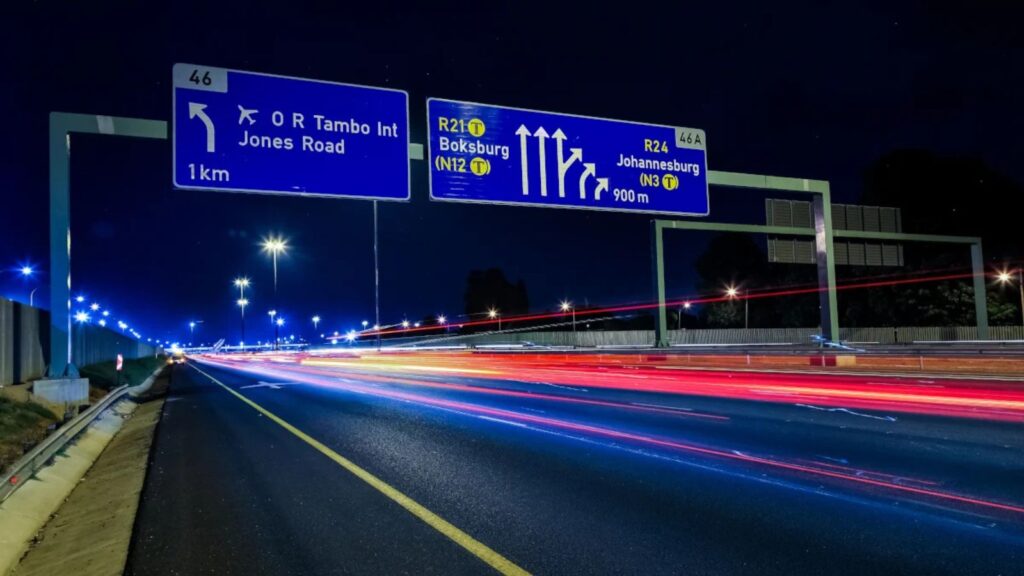
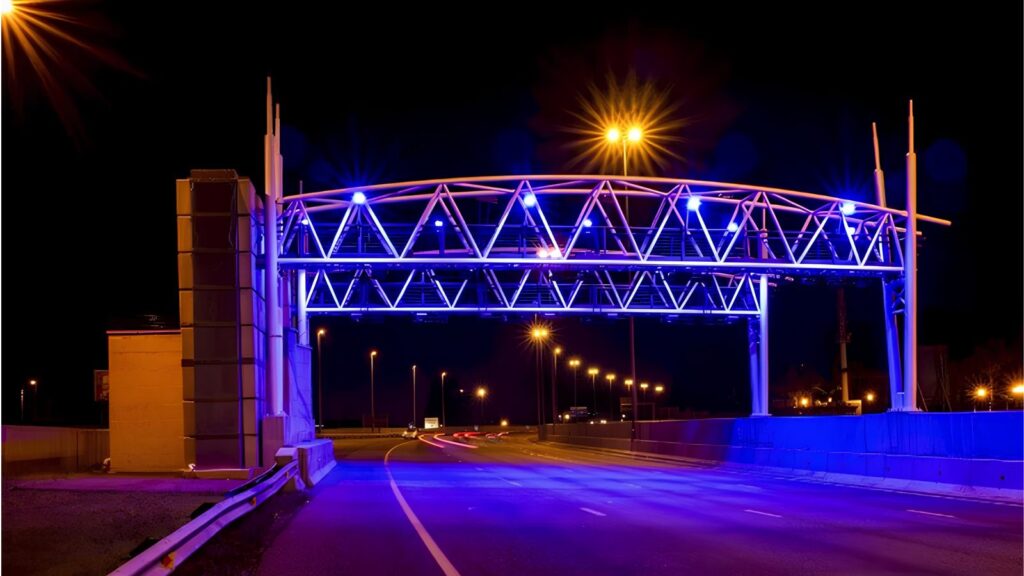
The government has signed a new agreement to investigate the feasibility of converting Gauteng’s e-toll gantries for speed enforcement and vehicle licence checks.
The agreement was made with the South African National Roads Agency (SANRAL) and the Gauteng Provincial Government to investigate the feasibility of repurposing the infrastructure.
In a recent parliamentary Q&A, Transport Minister Barbara Creecy noted that the plan includes using the gantries to monitor average speed over distance and check motor vehicle licences.
Creecy confirmed that a formal business case is now being developed. “The business plan will inform the project plan, timelines and budget,” she said.
E-tolls were first introduced in 2013 to fund the Gauteng Freeway Improvement Plan (GFIP), with motorists charged for passing under gantries installed across major highways, including the N1, N3, N12 and R21.
However, the system faced widespread resistance from the outset, with most motorists refusing to pay their toll fees.
Civil society groups led campaigns against it and argued that it unfairly burdened ordinary South Africans. After years of noncompliance, the government was ultimately forced to shut down the system in 2024.
According to OUTA and a parliamentary Q&A in 2012, the capital cost of e-tolls was just north of R20 billion.
With 43 overhead gantries spaced roughly 10km apart, this works out to an average cost of about R465 million per gantry.
The idea of repurposing the gantries is not new. A SANRAL tender issued in 2022 already proposed converting the infrastructure into a system capable of tracking stolen vehicles and identifying cloned number plates.
Wayne Duvenage, CEO of the Organisation Undoing Tax Abuse (OUTA), said the plan could be justified provided it serves the public rather than becoming another revenue-generating tool.
In an interview with SAfm Market Update, Duvenage described the infrastructure as “white elephants” that should not be wasted. “I don’t see a problem with repurposing them, so long as it’s for the benefit of society.”
The plan is viable if the gantries are used correctly
He also highlighted potential benefits such as tracking stolen vehicles and supporting policing efforts. “If it’s that type of thing, then I see no reason why not to repurpose it for that reason.”
However, he warned against using the system primarily to issue fines. “If you’re gonna repurpose it just for traffic fines purposes, be careful,” he said.
He stressed that visible policing remains more effective, and cautioned that expanding camera systems purely for revenue would be “a little bit of a dubious plan.”
Duvenage also argued that transparency will be critical. “What we want to see is that business plan, and what input they take from the public.”
In a separate interview with 702 Drive, Professor Innocent Musonda from the University of Johannesburg believes the agreement presents a meaningful opportunity rather than a sunk cost.
He described repurposing for crime detection, vehicle tracking and traffic management as “definitely viable.”
Musonda said the project’s success will depend on coordination among several government departments. “This project will definitely require all the resources, all the departments to come on board,” he said.
While acknowledging concerns about additional costs, he noted that significant investment has already been made, suggesting that further investment wouldn’t be necessary.
However, he added that this, again, will depend on effective planning and cooperation from various government bodies.
“There are a lot more benefits if properly planned; it’s a shame that at the moment, this infrastructure is not doing anything.”
