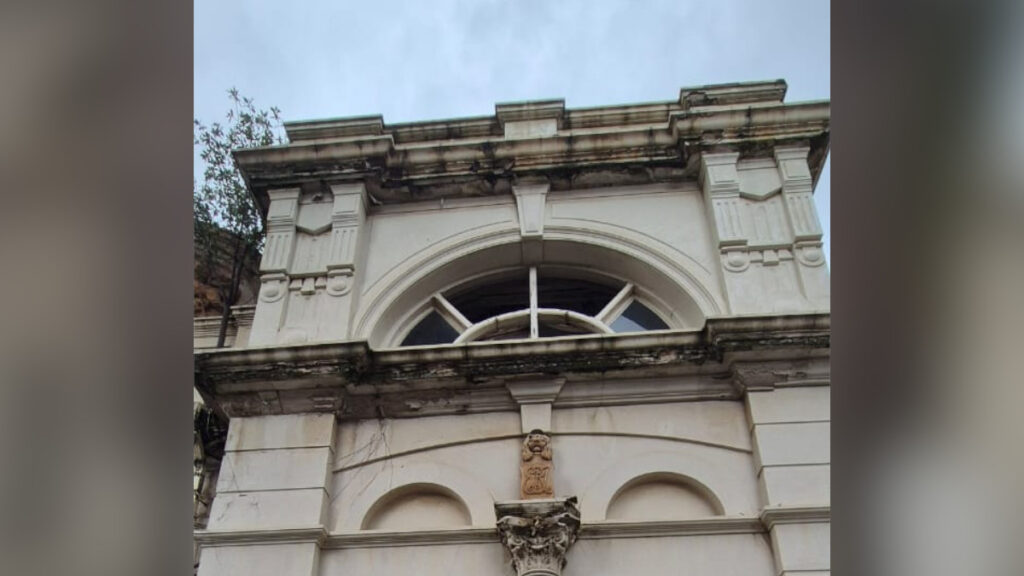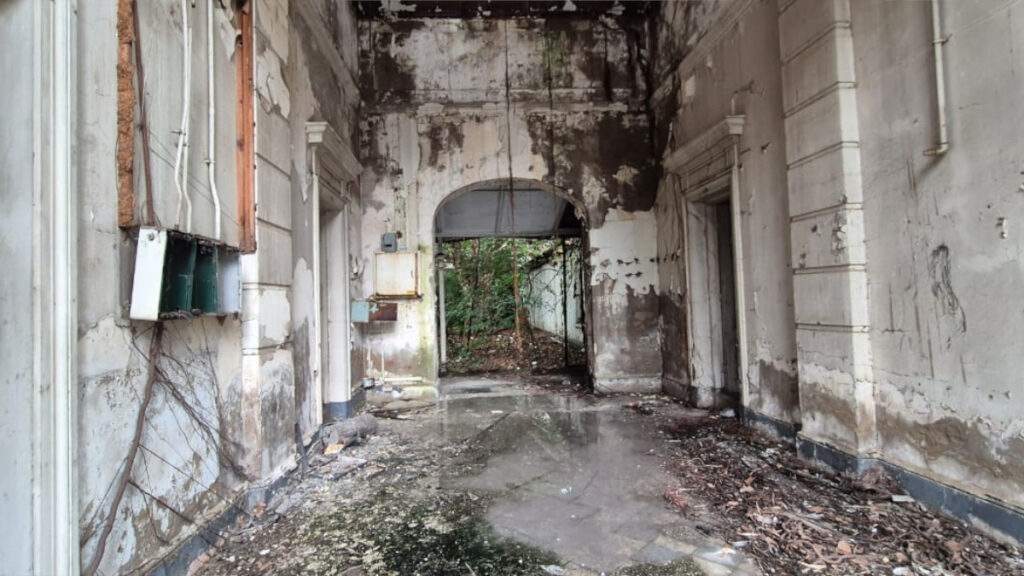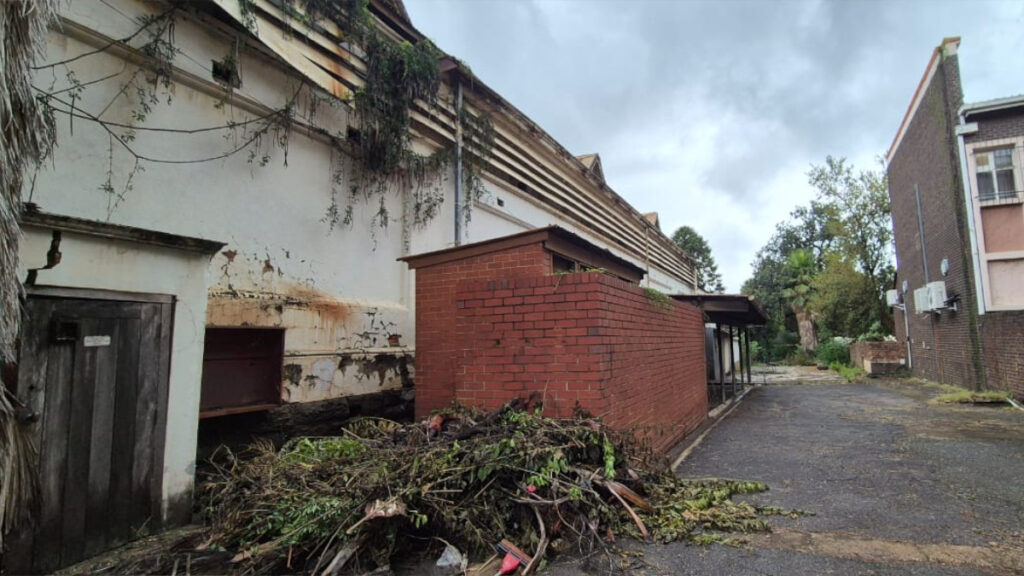

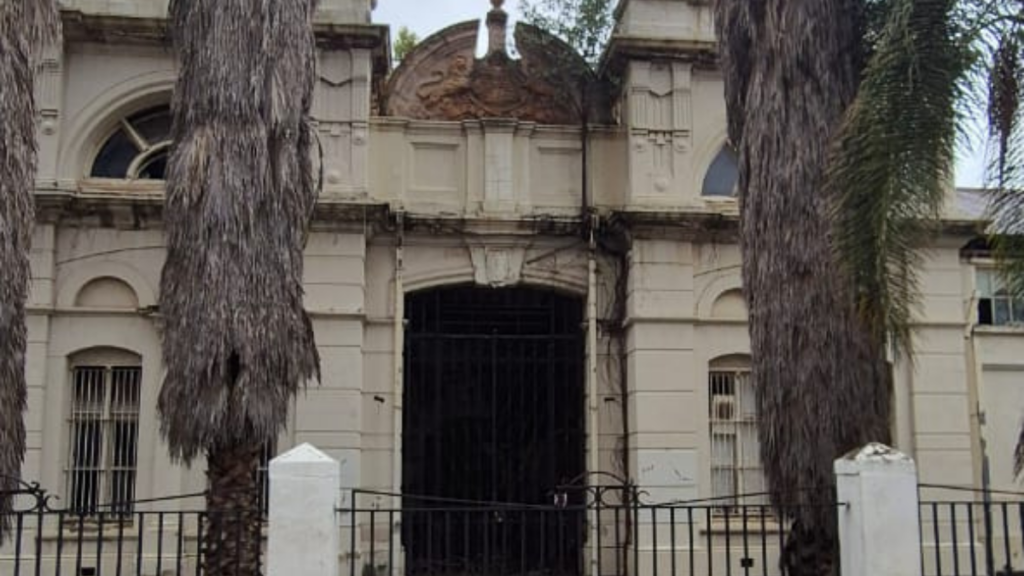
The building that housed the former “Staatsmuseum” (State Museum), which was built 124 years ago, stands empty on Boom Street in South Africa’s capital, Pretoria.
The State Museum, which was initiated in 1892 in a small room by South Africa’s State Secretary at the time, Dr W. J. Leyds, had moved several times over the years.
It moved from the former Parliament building (Raadsaal) to the Market Square and later to the now dilapidated building on Boom Street.
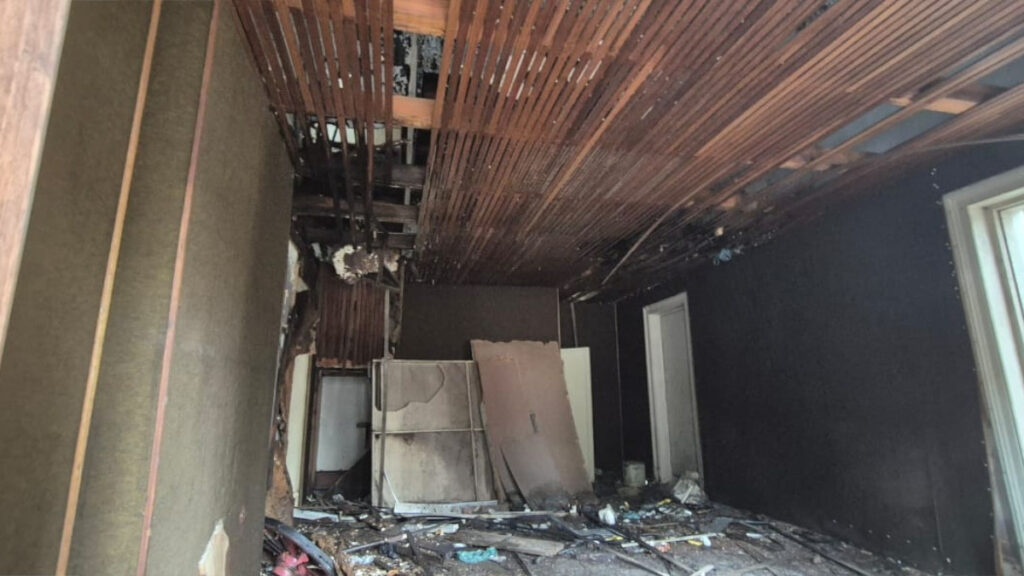
A recent inspection revealed broken windows, collapsed ceilings, cracked walls, and overgrown grass inside the building.
The museum, located on the grounds of the National Zoological Gardens, was built to house natural specimens, art, and cultural artefacts, including items from the Anglo-Boer War and Voortrekker culture.
Democratic Alliance (DA) Gauteng Spokesperson for Sport, Arts, and Culture, Recreation, Leanne De Jager, raised concerns about the state of the building and the whereabouts of the museum’s collections.
“The DA in Gauteng has tabled questions to the Gauteng Department of Sport, Arts, Culture and Recreation (SACR) seeking clarification on which authority is responsible for the neglected national monument and the whereabouts of its valuable collections,” said De Jager.
“We will also engage the National Departments of Arts and Culture, Public Works and Infrastructure regarding the state of the building.”
De Jager said that the party would demand answers on whether the building’s structural assessment has been conducted, what budget has been allocated for its maintenance or restoration, and whether concrete plans exist to restore “this National Monument.”
Tracing back the State Museum

In 1892, the State Museum was established in a small room in the former Parliament House on Church Square, and was then known as the Museum Room.
By 1893, the State Museum had outgrown its space and was difficult for visitors to access. As a result, a new building was acquired in what is now known as Lilian Ngoyi Street, to house its history and natural sciences collections.
In 1894, an additional building was built, to be used as a taxidermy studio, laboratory and for wagon storage.
At the time, the collection of the State Museum consisted of items made by “indigenous inhabitants; items of interest in the field of natural history, including animals, plants, fossils, minerals and ores,” said DITSONG National Museum of Cultural History Curator Frank Teichert.
In addition, the collection included items of European origin and history, particularly those related to the Boers and the Voortrekkers.
The museum faced the same issue it had in its early days due to its growing collections and was moved into a new building on Boom Street during the Anglo-Boer War in 1902—the building that is currently dilapidated and vacant.
The State Museum underwent several name changes thereafter, from the Pretoria Museum to the Transvaal Museum.
“The National Cultural History Museum (as it was previously known) was inextricably interwoven with that of the Transvaal Museum, whose collections tended more toward the natural sciences,” said Teichert.
In 1964, the National Cultural History Museum and the Transvaal Museum, which had originally formed the State Museum, split into two separate institutions.
The former Transvaal Museum, which is now known as the DITSONG: National Museum of Natural History, moved into a new building opposite the City Hall, where it is still located today.
However, the National Cultural History Museum, which also formed part of the State Museum, stayed in the building on Boom Street until 2000, when it relocated to its new permanent building in Visagie Street—where it remains active today.
“The foundation of the Museum’s archaeology collection was only laid after 1903 when the more systematically collected material of George Leith was bought by the board of the then Staatsmuseum after his death,” said Teichert.
The building that once housed the State Museum has been vacant, with its collections reportedly moved to the building on Visagie Street, now known as the DITSONG National Museum of Cultural History.