


South African electricity users are on a countdown to see just how much more they will be paying for electricity in 2026, with a potential 10.5% price hike on the cards.
Following a truncated public participation process that ended on 21 January, households will now have to wait until the end of the month for the energy regulator Nersa’s final decision.
An announcement is expected on or around 30 January 2026.
South Africans were initially expected to face an electricity price hike of 5.4% in 2026. However, due to Nersa’s errors, billions of rands were left out of the calculations used to determine that rate.
In late 2025, Nersa reached a closed-doors settlement with Eskom over the errors, allowing the power utility to collect an additional R54 billion from customers.
This would have pushed the 2026 price hike up to 8.8%.
However, once the ‘secret’ deal was made public, it was challenged in court by lobby group AfriForum and the Minerals Council of South Africa.
One of the key challenges to the settlement was that neither Nersa nor Eskom consulted with the public in arriving at the settlement, nor were any details provided on how the R54 billion figure was reached.
Nersa had argued that it wasn’t necessary to consult the public because it was simply correcting an error made in its calculations. It added that extensive consultations had already been done on the MYPD6 application.
However, the opponents argued that South Africans in general would be affected by the settlement and thus had a direct interest in the matter and the scale of the agreement.
The courts ultimately sided with AfriForum and the Minerals Council, ordering Nersa to hold consultations.
It was then revealed that the calculation error was far greater than R54 billion, and the actual figure owed to Eskom was R76 billion—potentially pushing the 2026 price hike up to 10.5%.
South Africans can’t keep paying for Eskom’s failures
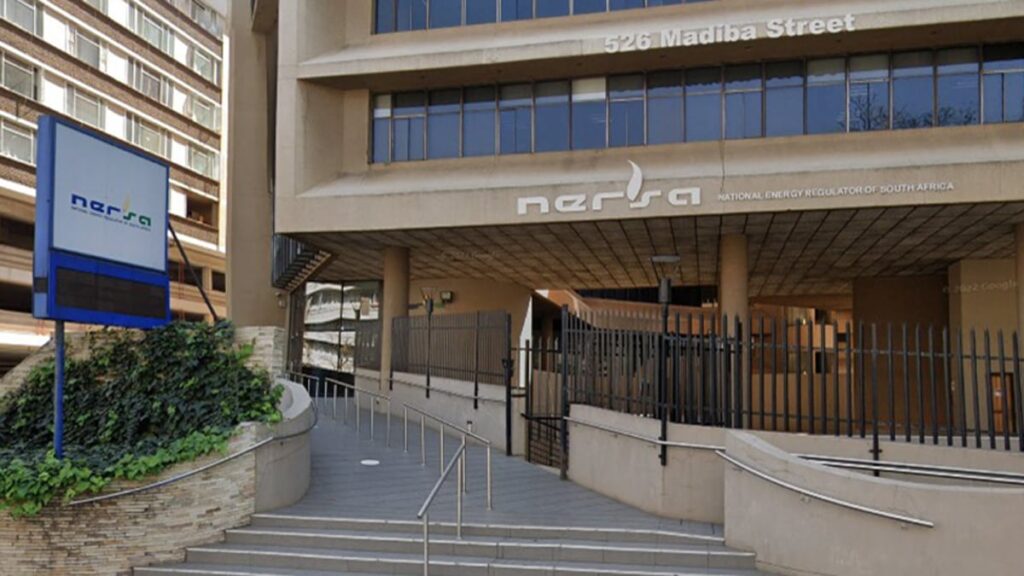
According to AfriForum, it completed a comprehensive submission on Nersa’s policy document by the deadline.
In its submission, it warned that Eskom’s current tariff and regulatory assumptions unfairly transfer the cost of Eskom’s historical mismanagement and governance failures onto electricity consumers.
The group’s submission focused on the use of the Weighted Average Cost of Capital (WACC), the valuation of Eskom’s Regulatory Asset Base, and the treatment of ageing and misaligned generation assets—core to Nersa’s R76 billion ‘miscalculation’.
It argued that these elements, when combined, have a disproportionate and compounding impact on electricity prices, with long-term consequences for households, businesses and the broader economy.
The group added that risk in a regulated monopoly must be allocated fairly. With no alternatives, South Africans at large are forced to underwrite Eskom’s poor performance.
“Consumers have no control over Eskom’s investment decisions, operational performance or governance failures, and no ability to choose an alternative supplier,” it said.
“Allowing Eskom’s elevated risk profile to be fully priced into tariffs through a higher WACC effectively requires consumers to underwrite Eskom’s malperformance.”
AfriForum also criticised the lack of clarity around Eskom’s asset valuation and calculations. This specifically concerns assets transferred from work under construction to commercial operation.
“The continued inclusion of assets without proper valuation is also an ongoing concern,” it said.
“Further, no mention is made of the failure to adequately address outstanding municipal debt in a way that protects paying consumers.”
According to AfriForum, these issues further inflate Eskom’s asset base and amplify the impact of an already elevated WACC, leading to consumers being saddled with higher prices.
The group said that South Africans cannot continue to be forced to pay ever-higher electricity prices to compensate for regulatory and institutional failures.
It said it would take further action if required.
