


The war in Iran revealed that South African pension funds are over-exposed to geopolitical events, which is forcing some of the country’s biggest funds to rethink their investment strategy.
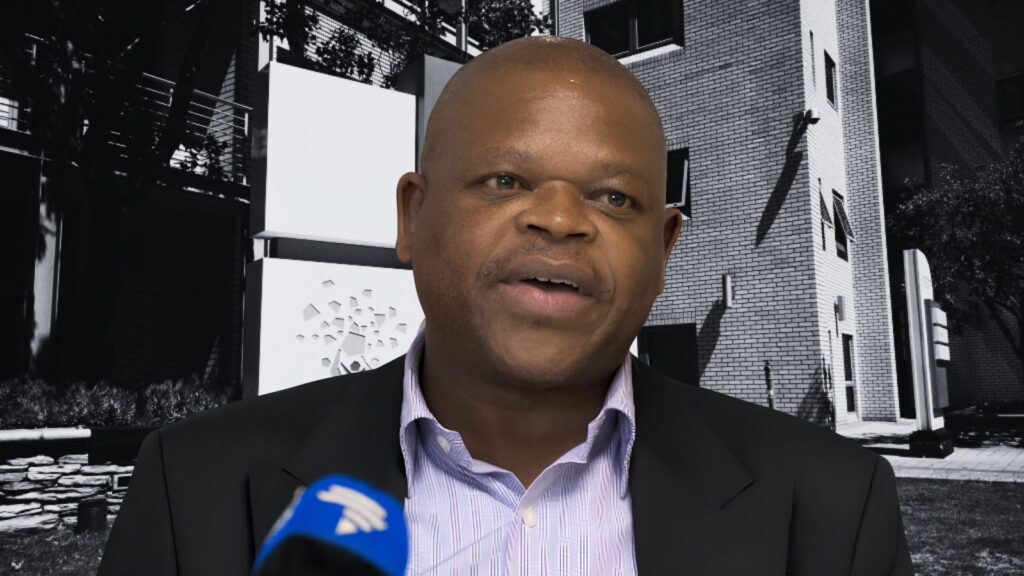
This is the feedback from Frans Baleni, chair of the Government Employees Pension Fund (GEPF), who noted that the fund took a major hit from the war in the Middle East.
Speaking in an interview with Moneyweb Radio, Baleni said the GEPF had built a strong track record of protecting public servants’ retirement savings over the past three decades.
“It’s three decades of safeguarding public servants’ retirement funds. At no stage has the fund had to go and beg the National Treasury to close any shortfall,” he said.
“This means that the investment the fund has made over the past 30 years has had good returns.” However, he warned that global instability is increasingly affecting the fund’s investment outlook.
Baleni stressed that the GEPF’s investment strategy has to change given the geopolitical developments. “Just to give an example, with the war in Iran, in the first week, it wiped out R200 billion from our investment.”
He added that the losses highlighted the need for the pension fund to adapt to changing global conditions while still ensuring strong long-term returns for its more than 1.7 million members and pensioners.
To do this, Baleni said the fund is shifting its focus to infrastructure investment. He argued that the GEPF has a responsibility not only to preserve retirement savings but also to support economic growth in South Africa.
“We are now going to be focusing on infrastructure development as part of our investment because it’s our view that while we are preserving the fund, we need good returns,” he said.
He added that this strategy would also help solve our country’s economic problems by boosting local investment.
Two-pot system is adding pressure
Baleni linked the country’s economic struggles directly to retirement outcomes, pointing to South Africa’s high unemployment rate as a major threat to long-term pension sustainability.
“We need more people to work and contribute to their pension fund or the retirement funds so that the economy can be stable.”
He added that the GEPF is also increasingly looking beyond South Africa for investment opportunities. “We’re also looking beyond the country,” Baleni said.
“I just came back from Nairobi, looking at East Africa. They’re doing excellent work. So we need to take some lessons and see where we can grow the fund.”
While infrastructure investment can support economic development, Baleni acknowledged that such projects also carry higher risks.
“Clearly, there are risks. Obviously, we don’t provide grants for everything we do. We have to calculate,” he said.
He explained that the fund is willing to take measured risks where there is a clear path to long-term returns.
As an example, he pointed to the mining sector, where the GEPF recently allocated funding for mineral exploration to help create future investment opportunities.
“We are the largest single investor in the mining space, but initially, we had no exploration fund. We have now allocated an exploration fund because we’re creating a pipeline,” he said.
“So we’re taking those small risks, but we know that we’re not reckless. There will definitely be returns.”
Baleni also raised concerns about the growing financial pressure on pensioners and workers, particularly under South Africa’s new two-pot retirement system.
He said many retirees are struggling because they often support extended family members in addition to themselves.
Baleni reiterated that he was among those who opposed the introduction of the two-pot retirement system, and warned that early withdrawals could worsen financial insecurity later in life.
“That’s why we have been discouraging the two-part system. It puts strain at the point of retirement, and that’s the real problem,” he said
However, he acknowledged that many workers are under severe financial stress and often need emergency access to retirement savings.
“The only way of changing it is to create jobs and create job opportunities so that individuals who are working are not pressurised by extended family,” Baleni said.
