


Mahindra is at an advanced stage of assessing plans to upgrade its South African plant to capitalise on the rising demand for affordable vehicles in the country.
Mahindra is India’s second-largest automaker with a market capitalisation of about 3.8 trillion rupees (over R600 billion).
Bloomberg reported that the company has been working with the Industrial Development Corporation to assess the feasibility of introducing completely knocked-down (CKD) production at its facility near Durban.
According to people familiar with the discussions, the talks remain private, and representatives for both organisations did not respond to requests for comment.
Mahindra currently assembles semi-knocked-down (SKD) vehicles at its Durban plant. This involves importing largely pre-assembled components for final assembly.
However, a shift to CKD manufacturing would mark a significant step up, allowing for more extensive local production processes.
It will also help the company avoid import tariffs under consideration by the government to boost domestic manufacturing.
The move comes as competition has intensified in South Africa’s mid-market vehicle segment, with Indian and Chinese brands gaining ground against established players such as Ford Motor Company and Mercedes-Benz.
Expanding local production could also strengthen Mahindra’s position against rivals like Chery and Suzuki, while Toyota remains the country’s top-selling brand.
Renai Moothilal, CEO and executive director of the National Association of Automotive Component and Allied Manufacturers (Naacam), said Mahindra’s rapid rise locally makes further investment a natural progression.
“It is clear that there’s a very strong domestic consumer appetite for their products, and Mahindra’s been assembling vehicles in the SKD facility in KZN for about six or seven years now,” he said in an interview with The Money Show.
He noted that the company’s consistent ranking among South Africa’s top 10 best-selling brands reinforces the case for expansion.
Naacam has been involved in discussions with Mahindra as it evaluates more advanced production models.
“My own organisation has been in several consultations with them over the years where they look to investigate how they can get to what we call CKD manufacturing and deepen the supplier base,” he explained.
Good news for jobs in South Africa
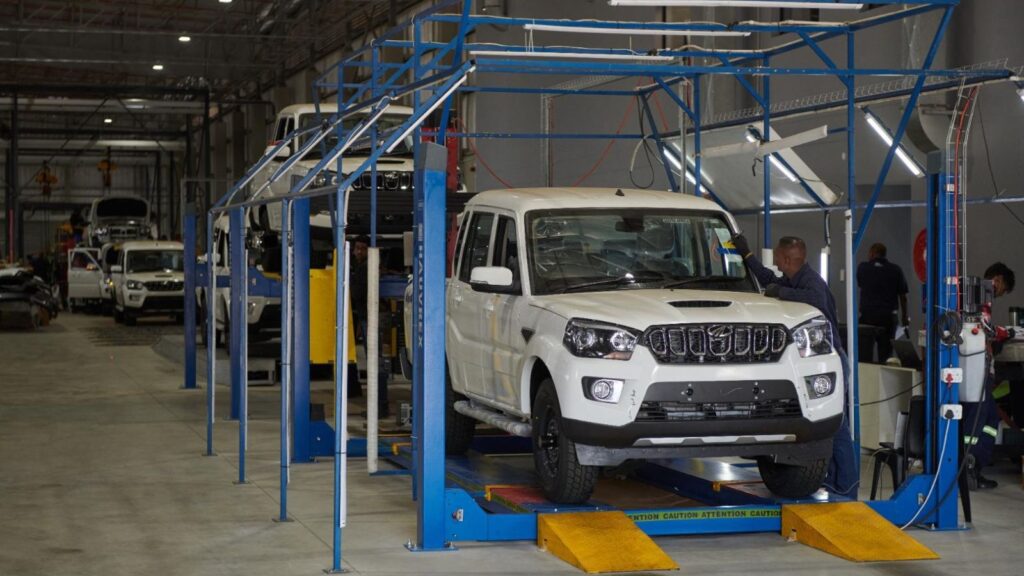
The impact on employment is particularly notable. “If I could just put it in job terms, a CKD plant tends to support eight jobs for every one that you find in an SKD plant,” Moothilal said.
He also highlighted broader gains if Mahindra pulls the trigger on the expansion. “With CKD, you get skills, technology, and a host of new, smaller business entrant opportunities, which is vital in South Africa.”
“We’ve been investigating with Mahindra for a period now, and I think they should, by the end of this year, have some conclusion on where they’re going to take the CKD plans,” he said.
He also addressed concerns about growing competition from newer entrants. “So I don’t think it’s a risk if they are coming in, particularly from a production perspective,” he said.
Instead, he warned about rising imports. “One thing is absolutely clear, and that is that South Africa has become very attractive for fully imported vehicles. Last year, we had a vehicle import penetration of close to 70%.”
He warned that this trend poses a long-term threat. “What is actually a risk is having a long-term import dominance in the market,” Moothilal said.
In contrast, deeper local manufacturing could strengthen the industry. “When these companies engage in deep manufacturing here in the country, they set up and make use of a component or supplier base as well,” he said.
