

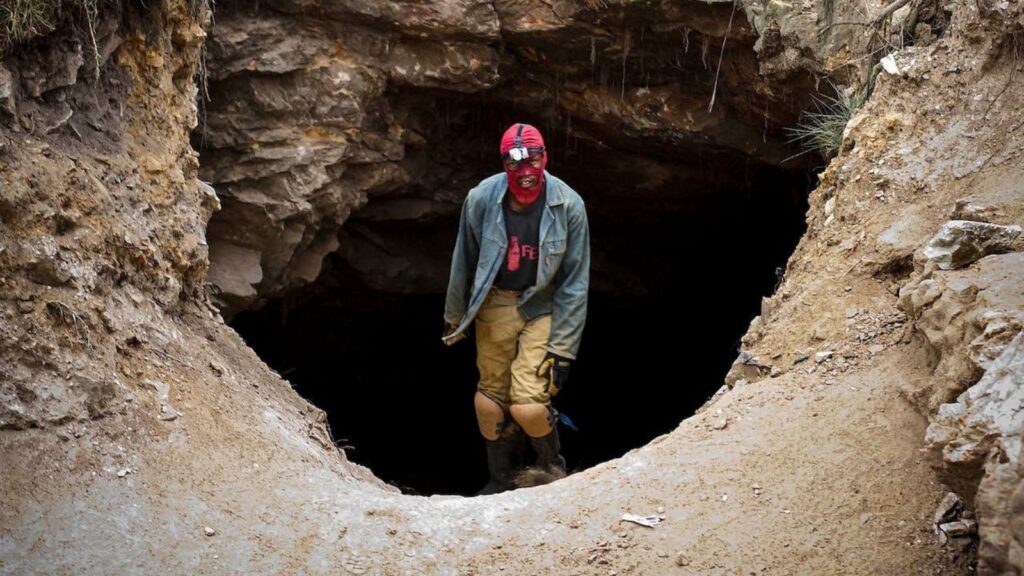
South Africa is under siege by far more dangerous and organised illegal mining groups than many realise, and they’re growing.
Illegal miners, or zama zamas, are no longer desperate individuals trying to survive. They have become heavily armed syndicates, ruining a big part of South Africa’s future.
This is the feedback from De Wet du Toit of the Blyde River Task Force, who said these “mafia-style” syndicates are taking over environmentally and economically critical regions.
“They are destroying environmentally and economically critical regions like Mpumalanga and areas bordering the Kruger National Park,” du Toit said in an interview with BizNews.
According to Du Toit, these operations are enforced through violence by heavily armed groups, many of whom are foreign nationals.
“They are heavily armed. They use small arms and sometimes even RPGs. They are a criminal group that uses violence to set down the rules.”
He stressed that the brutality involved is extreme and often overlooked. “The brutality that these guys are capable of is something that’s kind of hard to get your mind around. We’re talking about mass killings, mass burials,” he said.
“These syndicates typically involve Mozambicans, Zimbabweans, and the Basothos, with most of them, if not 99%, undocumented.”
Aside from the violence and threat to communities, Du Toit highlighted the severe environmental damage caused by illegal mining practices.
The widespread use of toxic chemicals is contaminating entire ecosystems. “You see the utilisation of poisons like cyanide and mercury, that’s just completely unregulated and making its way into our water systems,” he said.
“We are in effect talking about complete water systems from source to ocean being poisoned.”
He added that the structure of these syndicates extends beyond the miners themselves. “Like with any other type of syndication, you get different levels,” he explained.
He said these groups operate a complex network that allegedly reaches into senior political and law enforcement structures.
At ground level, the armed enforcers are not the masterminds but remain the most dangerous element.
It’s going to take years to address the problem
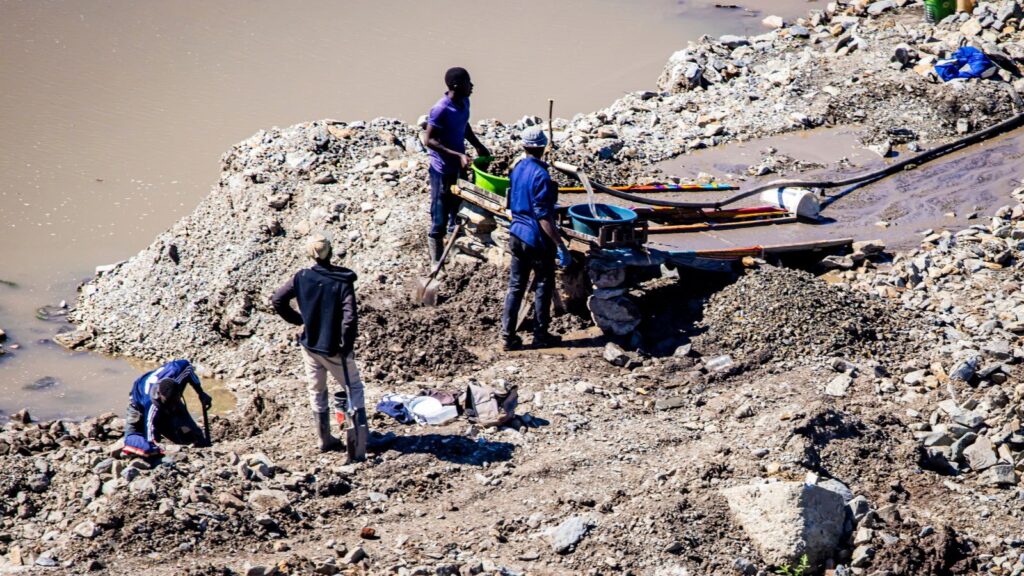
Despite the scale of the problem, Du Toit said the state response has been inadequate. “The crisis has spiralled out of control in the last three to five years despite repeated warnings and media exposure.”
In some cases, illegal operations have been found operating openly near police stations. “One of the first big processing sites we uncovered was within one kilometre of a police station, and they were largely left unchecked.”
He described law enforcement efforts as largely superficial. “You see these sporadic police operations, but they are largely window dressing exercises,” he said.
The economic impact is equally severe. Du Toit noted that they do not contribute in terms of tax, and they are taking potential jobs from our local people.
For communities in affected areas, the consequences are harsh. Some residents have fled. Others have been drawn into the illicit economy, while some have paid with their lives.
Du Toit himself acknowledged the risks faced by those confronting the syndicates. “My colleague has been shot three times. This is a violent, syndicated type of crime,” he said.
While the Blyde River Task Force is working to gather scientific evidence, build legal cases, and pressure authorities, Du Toit said resolving the crisis will take time and sustained effort.
“It’s going to take a couple of years, but we have no option. We have to protect our water. It is absolutely crucial,” he said.
